

This vegan agedashi tofu is made with cubes of melt-in-your-mouth silken tofu wrapped in a light, crispy coating, then served in a savory umami-rich broth with flavorful garnishes. Every bite has the most satisfying contrast of delicate, creamy tofu and crisp golden edges!
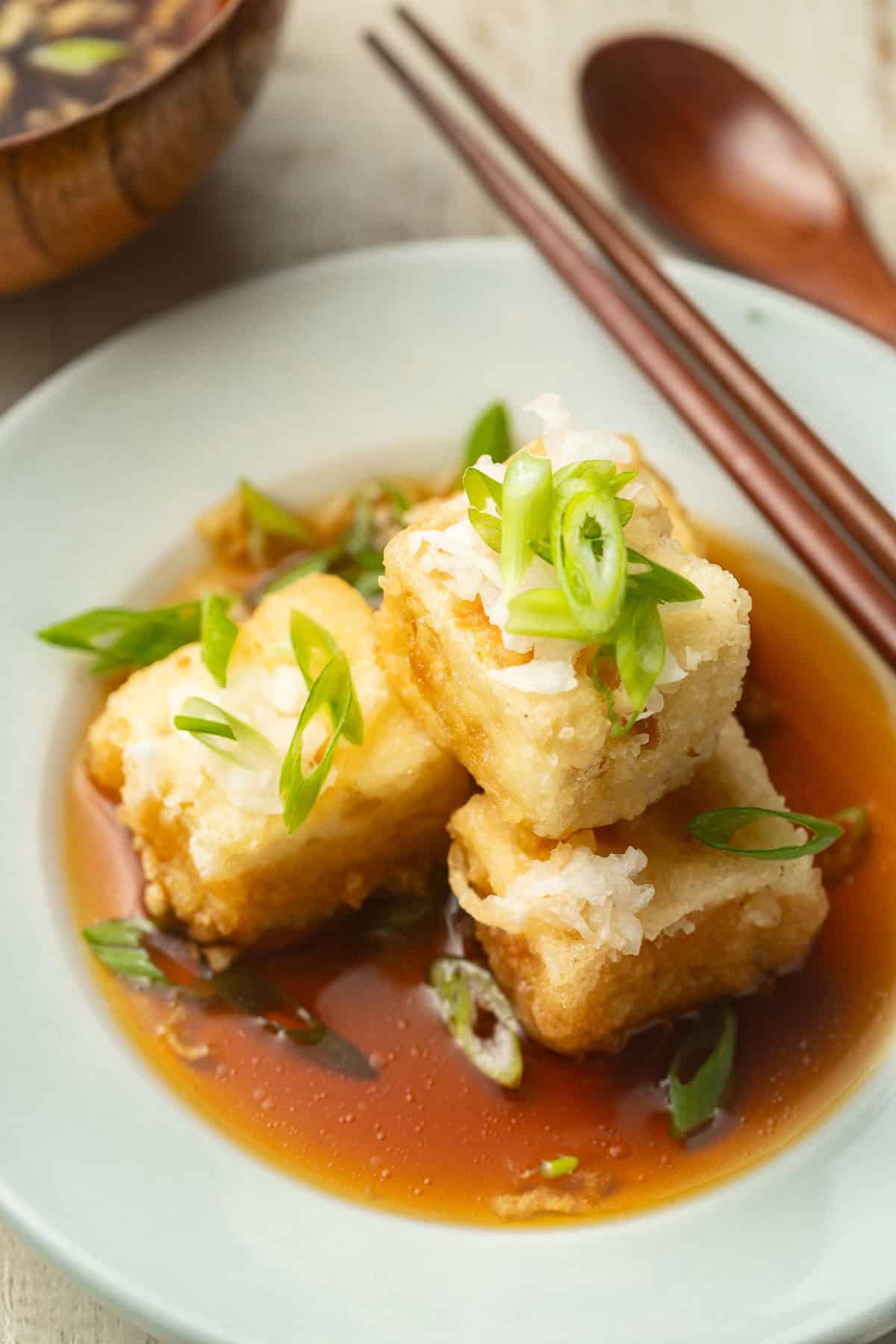
Agedashi tofu became one of my accidental favorite dishes after I stopped eating meat. I say "accidental" because I had no idea the sauce was made with bonito flakes (a.k.a., fish flakes). Oops! This happened with a handful of other dishes, like Thai curries (shrimp paste and fish sauce!) and Worcestershire sauce (anchovies!). It can take a while to get the hang of things! But in the case of agedashi tofu, I was particularly annoyed, because I loved the stuff. So I finally took matters into my own hands and made some vegan agedashi tofu — no fish!
Jump to:
If you've never had agedashi tofu, you might have no idea what I'm talking about. Here's the deal: this Japanese dish is made with cubes of tofu coated in a delicate layer of starch and fried until crispy. They're served in a savory dashi-based broth (that's where the fish traditionally comes in), with toppings like grated daikon, ginger, and scallions.
It's a really, really delicious combination, and even if you think you don't like tofu, you might just love this. The creamy tofu, crisp coating, and savory broth create such a satisfying mix of textures and flavors, and these little cubes are seriously addictive.
Ingredients You'll Need
Below you'll find a list of ingredients in this recipe, with notes and substitutions. Scroll all the way to the bottom of the post to see the full recipe, including the amount of each ingredient.
- Water.
- Dried shiitake mushrooms. Grab these at an Asian market or online. I like using sliced ones, but you could substitute whole dried shiitakes if you'd like.
- Kombu flakes. These are also available at Asian markets. You can also use a whole sheet of kombu if preferred. It'll give the broth a distinctive, umami flavor that might be familiar if you're a fan of my vegan miso soup.
- Soy sauce. Tamari and liquid aminos work if you need a substitute.
- Mirin. Grab a bottle of this cooking wine while you're at the Asian market.
- Sugar. I like to use organic granulated sugar to keep the recipe vegan, since conventional sugar is often processed with animal bone char.
- Vegetable oil. Any neutral high-heat oil you like to use for frying is fine — peanut oil, corn oil, and canola oil are all good options.
- Silken tofu. Silken tofu is often sold in different firmness varieties. If you've never made agedashi tofu before, I highly recommend choosing the firmest variety available. Silken tofu is very delicate, and firmer varieties will be easier to work with.
- Cornstarch.
- Daikon radish. Grab this from the produce section of the Asian market. Daikon are huge, and you'll only need a little bit. Use what's left in a stir-fry, in pickled veggies for a tofu banh mi, or in a batch of homemade vegan kimchi.
- Fresh ginger.
- Scallions.
Tip: If you love silken tofu and want more savory ways to enjoy it, try my chili garlic silken tofu, vegan mapo tofu, and spicy Korean tofu soup.
How It's Made
Below is a detailed photo tutorial on how to make this dish. Scroll all the way down if you'd like to skip right to the recipe!
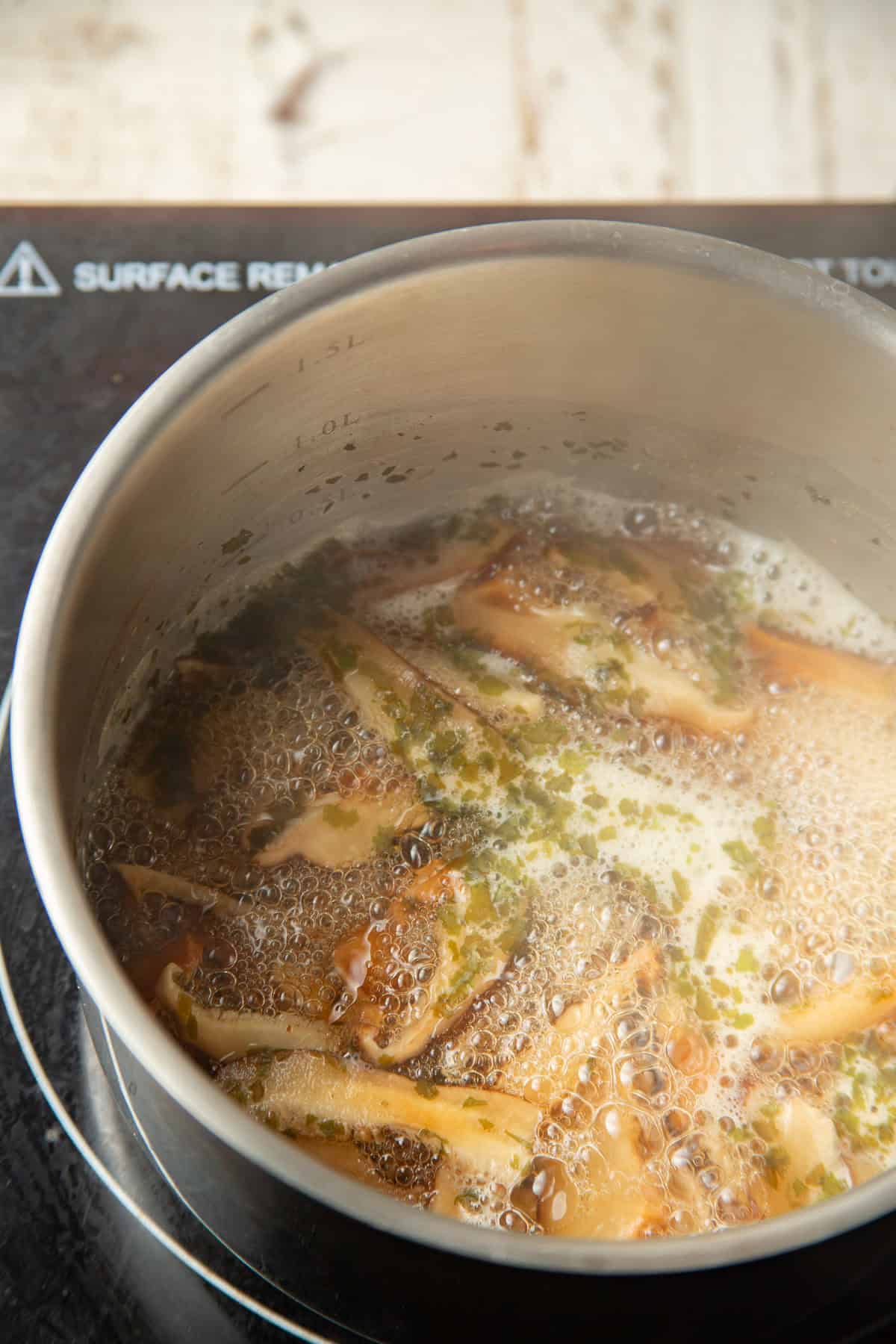
Simmer the broth. Stir the water, dried shiitakes, and kombu together in a saucepan. Place it over medium heat, bring the water to a simmer, then immediately remove it from heat and use a fine mesh strainer to remove the mushrooms and kombu.

Season the broth. Stir your soy sauce, mirin, and sugar into the remaining liquid. Set the mixture aside for now.
Prepare for frying. Prepare the tofu by removing it from the package, patting it dry with a towel, and cutting the block into 8 cubes. Heat about ¼-inch of oil in a skillet and place your cornstarch in a bowl.
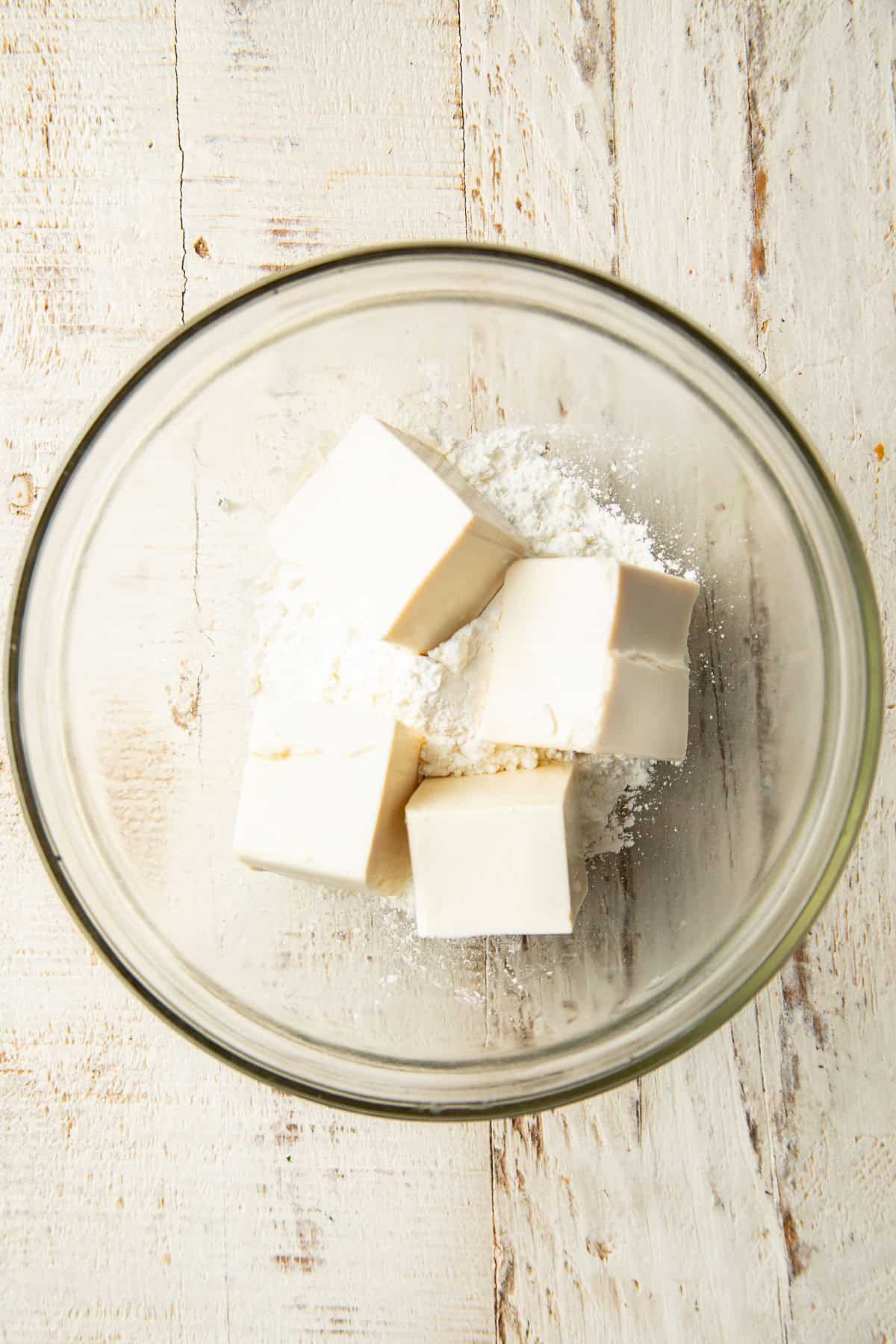
Coat the tofu: Place a cube (or a few, but be gentle!) into the cornstarch and lightly coat all sides.
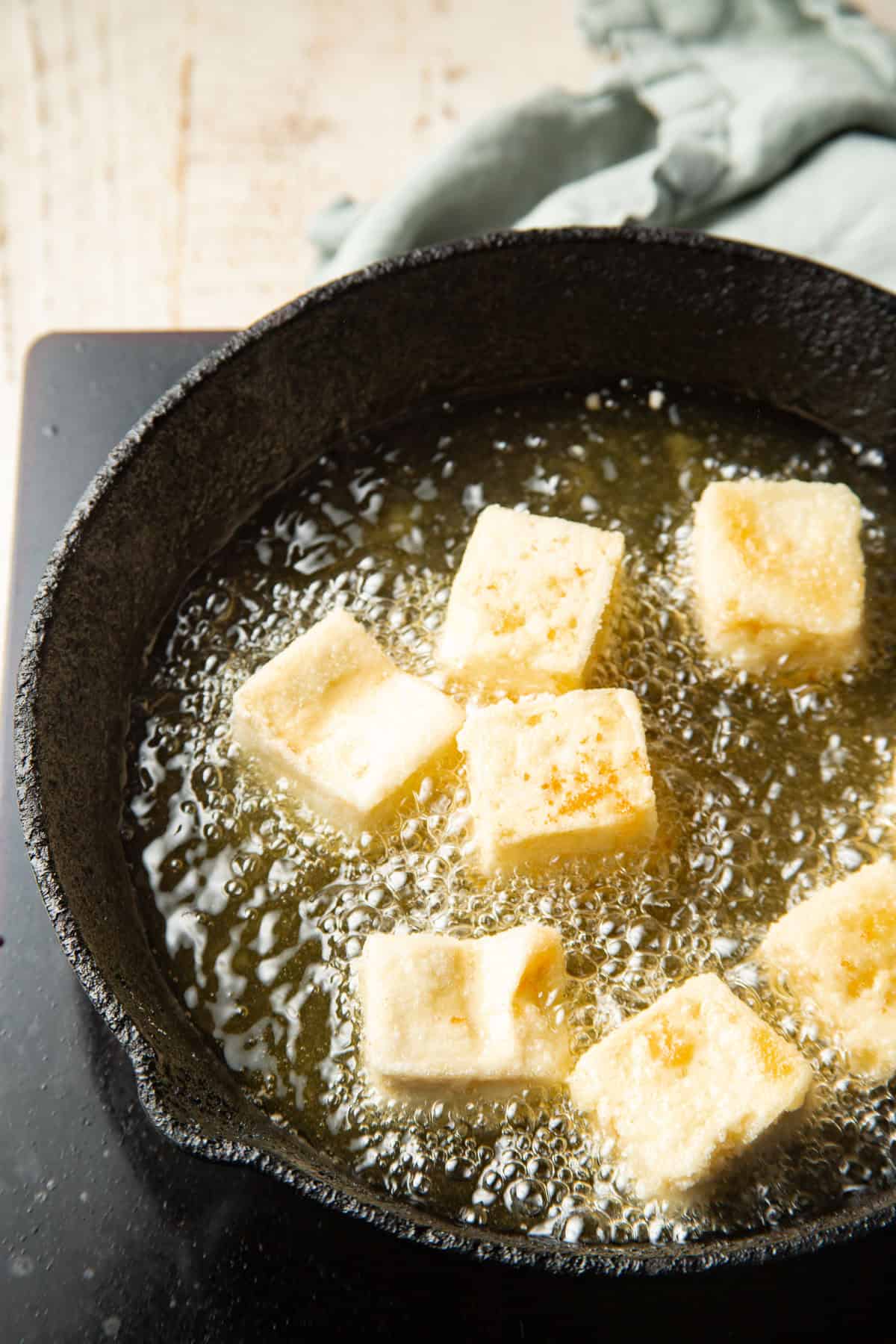
Fry the tofu: Place the pieces into the skillet and fry them for a few minutes, turning halfway through, until they're golden brown and crispy. Let them drain on a wire rack when done.
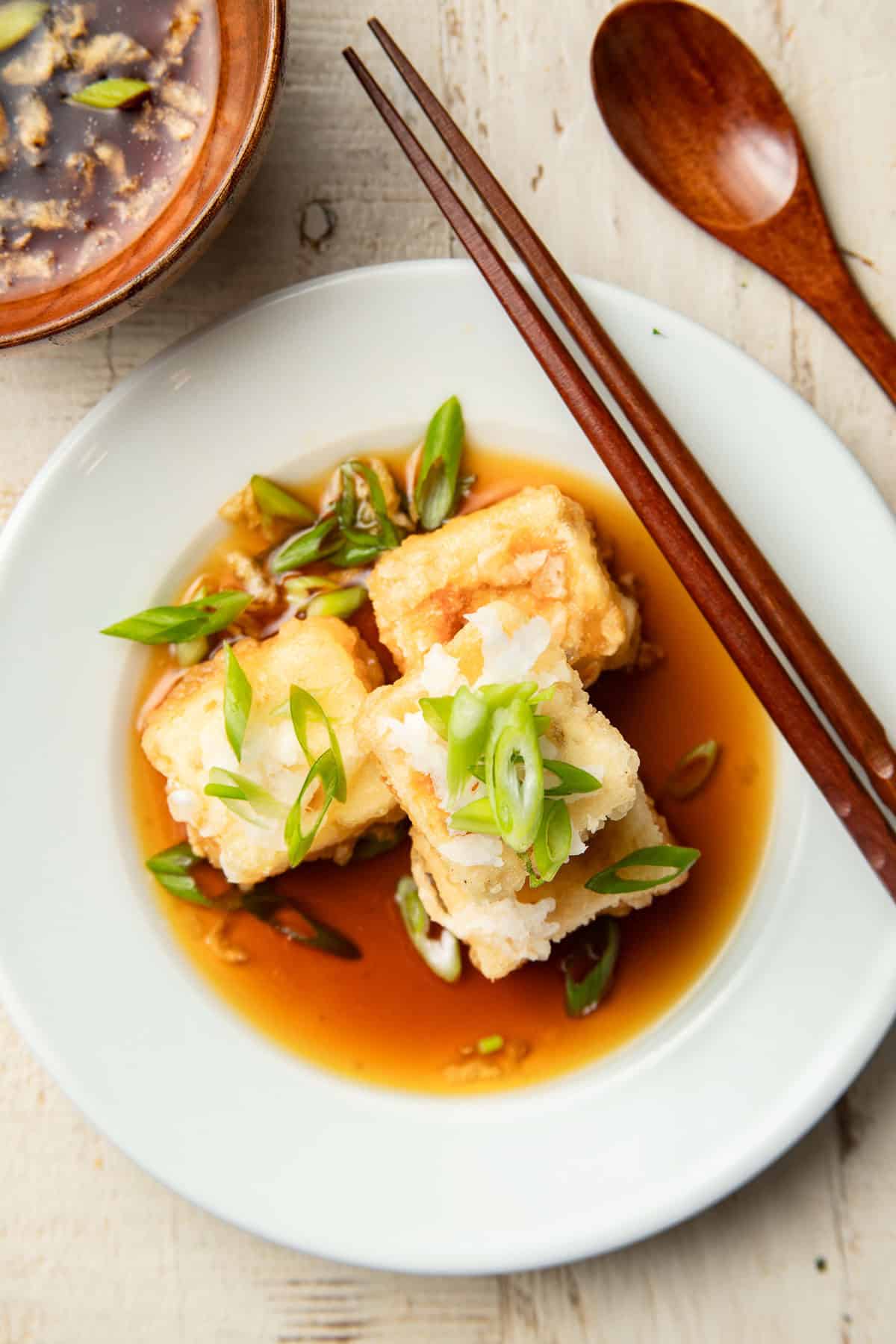
Serve. Divide the broth up among bowls, then place a few tofu cubes into each bowl. Top your tofu with grated daikon, ginger, and chopped scallions. Serve it right away, while it's hot and crispy!
Frequently Asked Questions
Yes! Substitute gluten-free tamari for the soy sauce.
You can! Many restaurant versions of agedashi tofu are made with silken tofu, but regular tofu works too. It will be a little firmer and less custardy inside, but it’s also easier to handle if you’re new to frying tofu.
I don't recommend it. The cornstarch coating needs a heavy, even distribution of oil in order to crisp up properly, and silken tofu is too delicate to toss or rub with oil after coating. In the oven, you're likely to end up with dry, powdery patches of cornstarch instead of the thin, crisp coating you get from frying.
Store your broth, garnishes, and tofu in separate airtight containers in the fridge for up to 3 days. To reheat the tofu, place the pieces on a baking sheet and in a 400°F oven until they start to crisp back up and sizzle.
What to Serve with Vegan Agedashi Tofu



Like this recipe? If so, please stop back and leave me a review and rating below if you try it! Also be sure to follow me on Facebook, Pinterest or Instagram, or subscribe to my newsletter for more recipes like this one!
📖 Recipe
Vegan Agedashi Tofu
Ingredients
For the Broth
- 1 ½ cups water
- ½ cup dried shiitake mushroom slices
- 1 ½ teaspoons kombu flakes (or a 4-inch piece)
- 1 ½ tablespoons soy sauce, plus more to taste
- 1 ½ tablespoons mirin
- ¾ teaspoon organic granulated sugar
For the Tofu
- Vegetable oil
- 1 (10.3 ounce/292 gram) package silken tofu (Note 1)
- ⅓ cup cornstarch
For Serving
- ¼ cup grated daikon radish
- 1 teaspoon freshly grated ginger
- 2 scallions, chopped
Instructions
- To make the broth, first combine the water, dried shiitakes, and kombu in a small saucepan. Place it over medium heat and bring the water to a simmer. Immediately remove it from the heat, then use a fine-mesh strainer to remove the dried shiitakes and kombu (Note 2).
- Stir the soy sauce, mirin, and sugar into the strained liquid. Set the mixture aside.
- Carefully remove the tofu from the packaging, gently blot it with paper towels, then cut the block into eight cubes.
- Generously coat the bottom of a large nonstick skillet with oil, pouring it to about ¼-inch deep. Place the skillet over medium heat.
- While the oil heats up, place the cornstarch into a small bowl.
- Once the oil begins to shimmer, carefully coat a piece of the tofu in the cornstarch, shaking off any excess, then transfer it to the hot oil. Repeat for as many pieces of tofu as you can fit into the skillet without crowding. Fry the tofu cubes for about 3 to 4 minutes, then gently turn the pieces over and fry for another 3 to 4 minutes, until golden brown and crispy. Transfer them to a wire rack to drain when done, then repeat the process for any remaining tofu.
- To serve, warm the broth back up if it has cooled down, divide the broth among small bowls, then place a few tofu cubes in each bowl. Top with grated daikon, ginger, and chopped scallions. Serve.
Notes
- Some brands of silken tofu are available in soft, firm, and extra-firm varieties. Any will work for this recipe, but extra-firm will be the easiest to work with.
- You can optionally return the shiitakes to the broth if you'd like. They would make a nice garnish and a tasty addition.
Would you like to save this?
Nutrition
Nutrition information is provided as an estimate only and may vary based on ingredients, brands, portion sizes, and preparation methods.

Comments
No Comments