

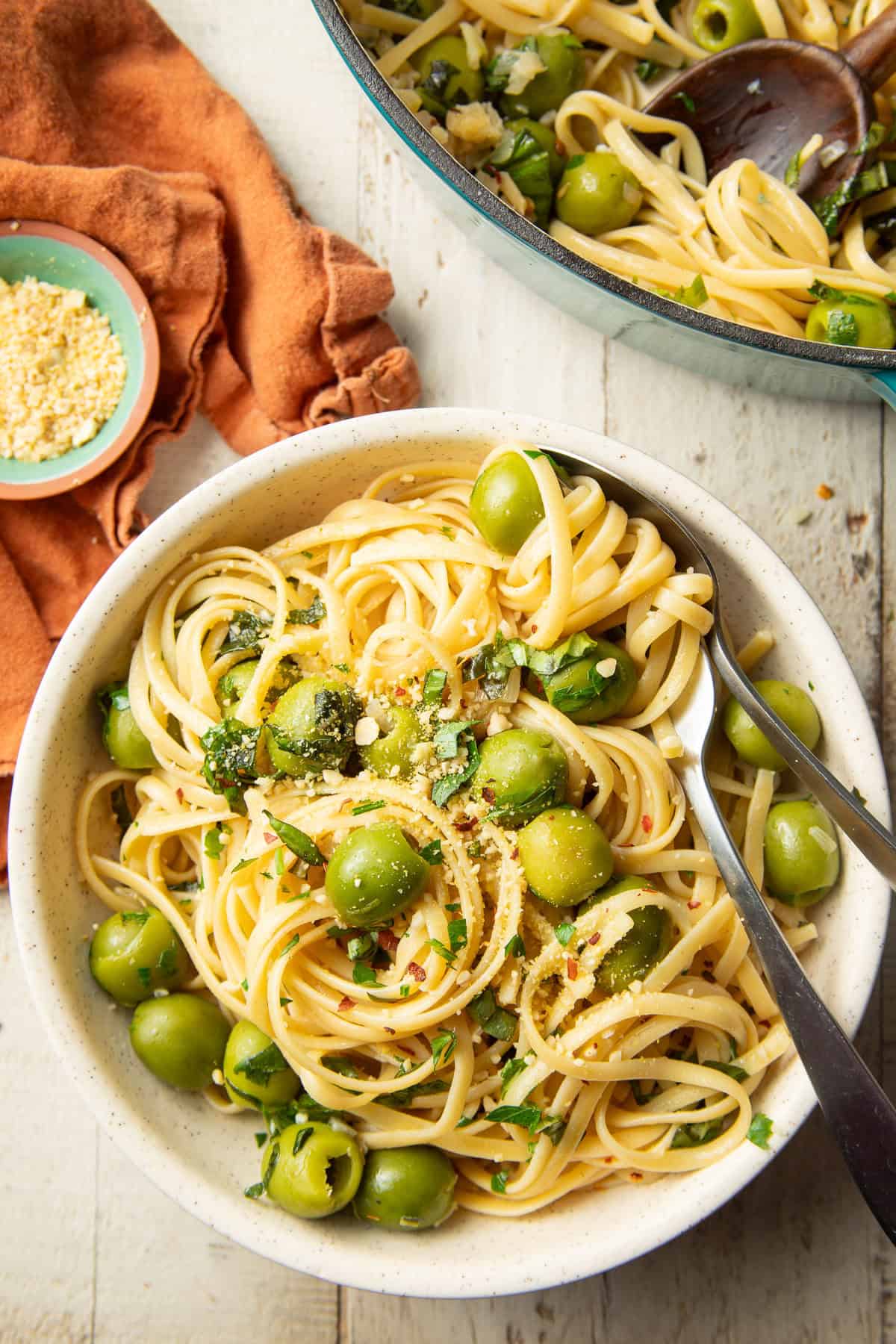
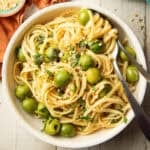
This green olive pasta is a must-make for olive lovers! Bursting with juicy, briny olives, fresh basil, and zippy lemon, it's a flavor-packed meal that can be made in about 20 minutes!
When I was a kid, I was known for stealing all the olives off snack trays at family gatherings. I'd arrange them on my fingers and eat them all, repeatedly, until I was too full for dinner. I eventually ditched that reputation once I learned to be discreet about my olive thievery.
Jump to:
I'm KIDDING. Sort of. I don't really steal olives anymore, but I still love them. Are you a fellow olive lover? If so, maybe you agree that we need more olive-centric recipes in the world. I'm here to help with that today. I already have a bunch of great recipes that include olives, like my vegan pasta puttanesca, Spanish rice and beans, and even my vegetable tagine. But in today's green olive pasta recipe, olives are the star.
This recipe features a ton of green olives, along with a bunch of additional Mediterranean-inspired flavors that pair beautifully with them — zesty garlic, zippy lemon, fresh parsley and basil, white wine, and a little kick from red pepper flakes. There's not a ton of prep work, and everything cooks up super quickly, making this a restaurant-worthy meal that can be on the table in a flash!
Ingredients You'll Need
Below you'll find a list of ingredients in this recipe, with notes and substitutions. Scroll all the way to the bottom of the post to see the full recipe, including the amount of each ingredient.
- Dried linguine. You can substitute basically any dried pasta variety if you prefer. I personally like long noodles with my olives, but go with your preference.
- Olive oil. Yes, you can substitute another neutral high-heat oil, but we are making olive pasta, so why not go with olive oil?
- Shallot.
- Garlic.
- Crushed red pepper flakes. These will give the dish a mild kick. Leave them out if you'd prefer.
- Fennel seeds. Grab these in the spice aisle. They'll add a mild herbal undertone that goes really nicely with the zippy, briny quality of the olives.
- White wine. Stick with a dry variety like sauvignon blanc or pinot grigio, and be sure to run your brand through Barinvore before you buy, since not all wines are vegan.
- Castelvetrano olives. These Italian green olives are a touch milder than other varieties, making them great for a dish like this where we're using a lot of them. That said, if you have another type of green olive on hand, feel free to use it.
- Lemon juice. Stick with fresh just for the best flavor.
- Lemon zest.
- Fresh basil.
- Fresh parsley. Flat leaf is the way to go, if possible — it's more flavorful than curly parsley.
- Salt and pepper.
How It's Made
Below is a detailed photo tutorial on how to make this dish. Scroll all the way down if you'd like to skip right to the recipe!
Step 1: Cook the pasta. Follow the package directions for cooking your pasta until the al dente stage, meaning a tad undercooked. Reserve a bit of the pasta cooking water when you drain it.
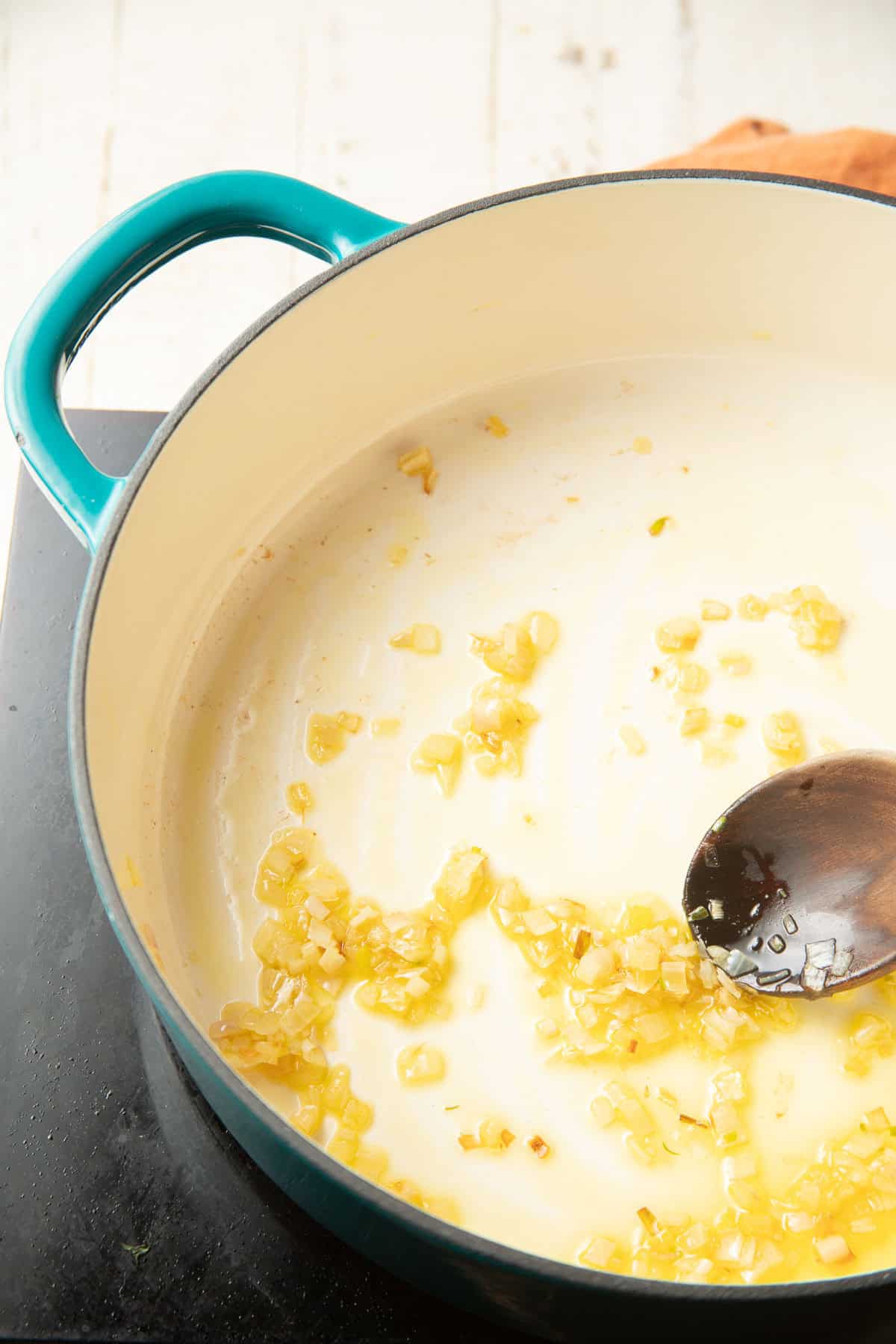
Step 2: Cook the shallot. Heat your olive oil in a skillet or shallow pot, then add minced shallot. Cook it for a few minutes to start softening it up.
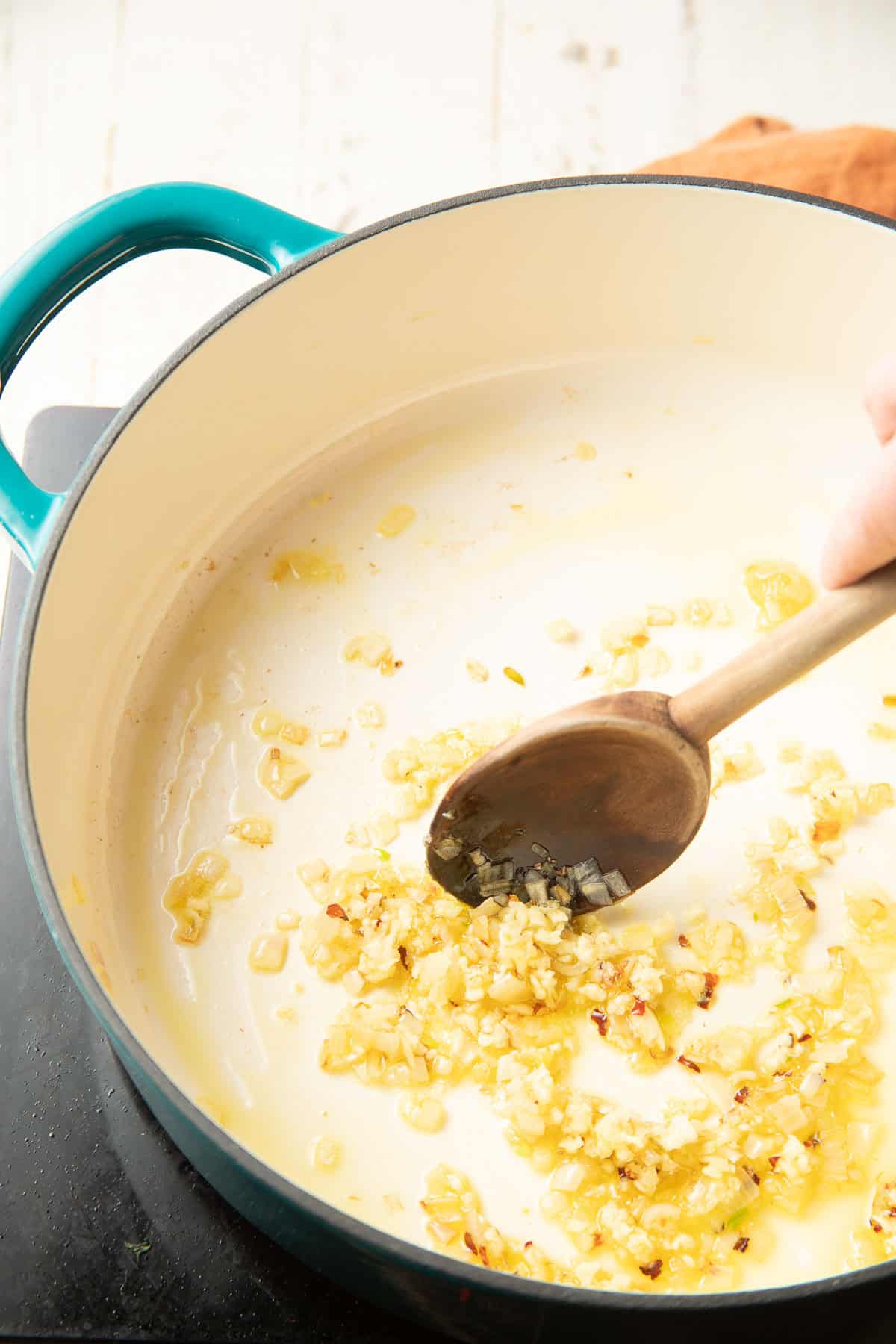
Step 3: Cook garlic and spices. Add minced garlic to the skillet, along with crushed red pepper flakes and fennel seeds. Cook everything briefly, stirring constantly.
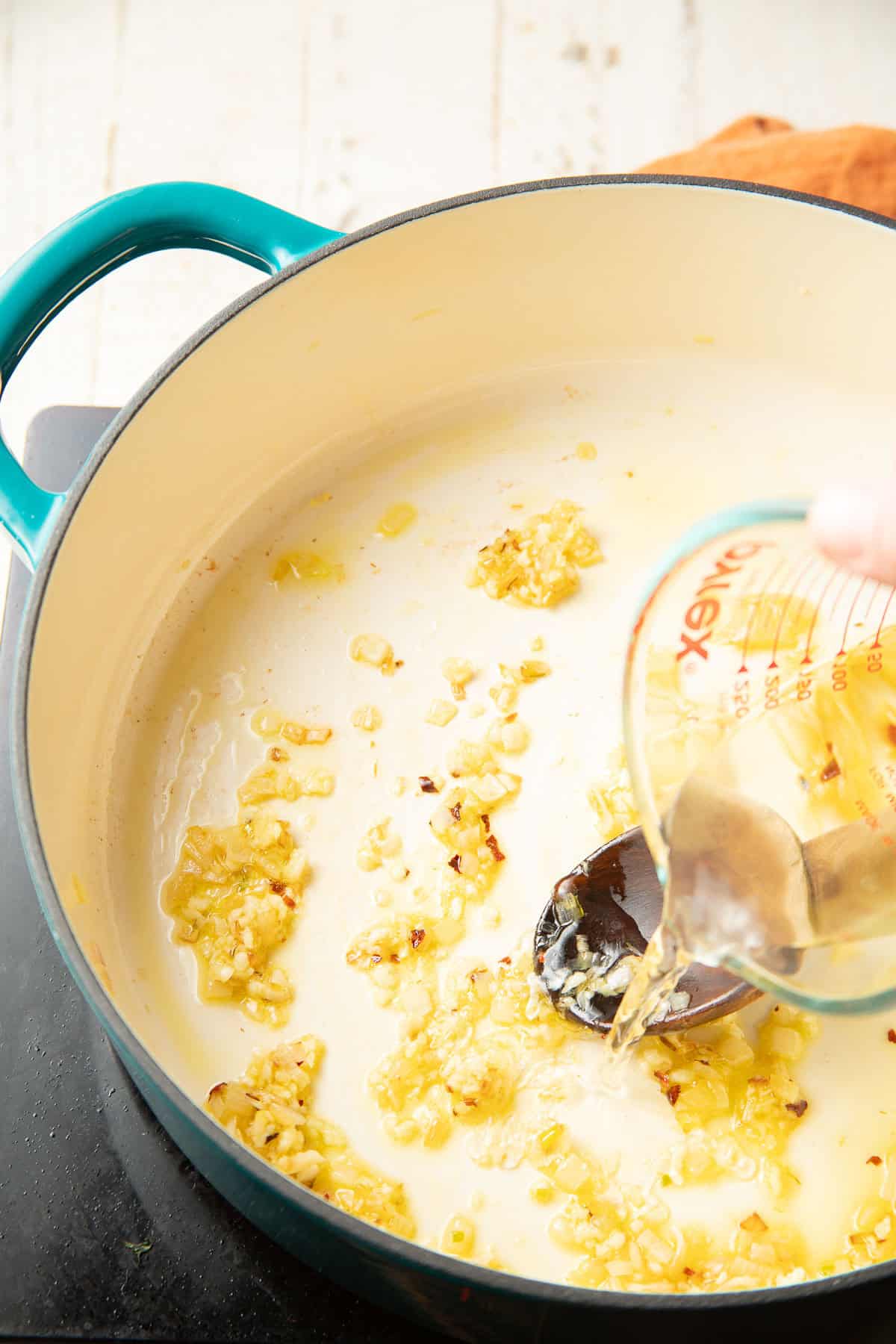
Step 4: Reduce the wine. Add your white wine to the skillet, then let it gently simmer for a few minutes, until it reduces by about half.
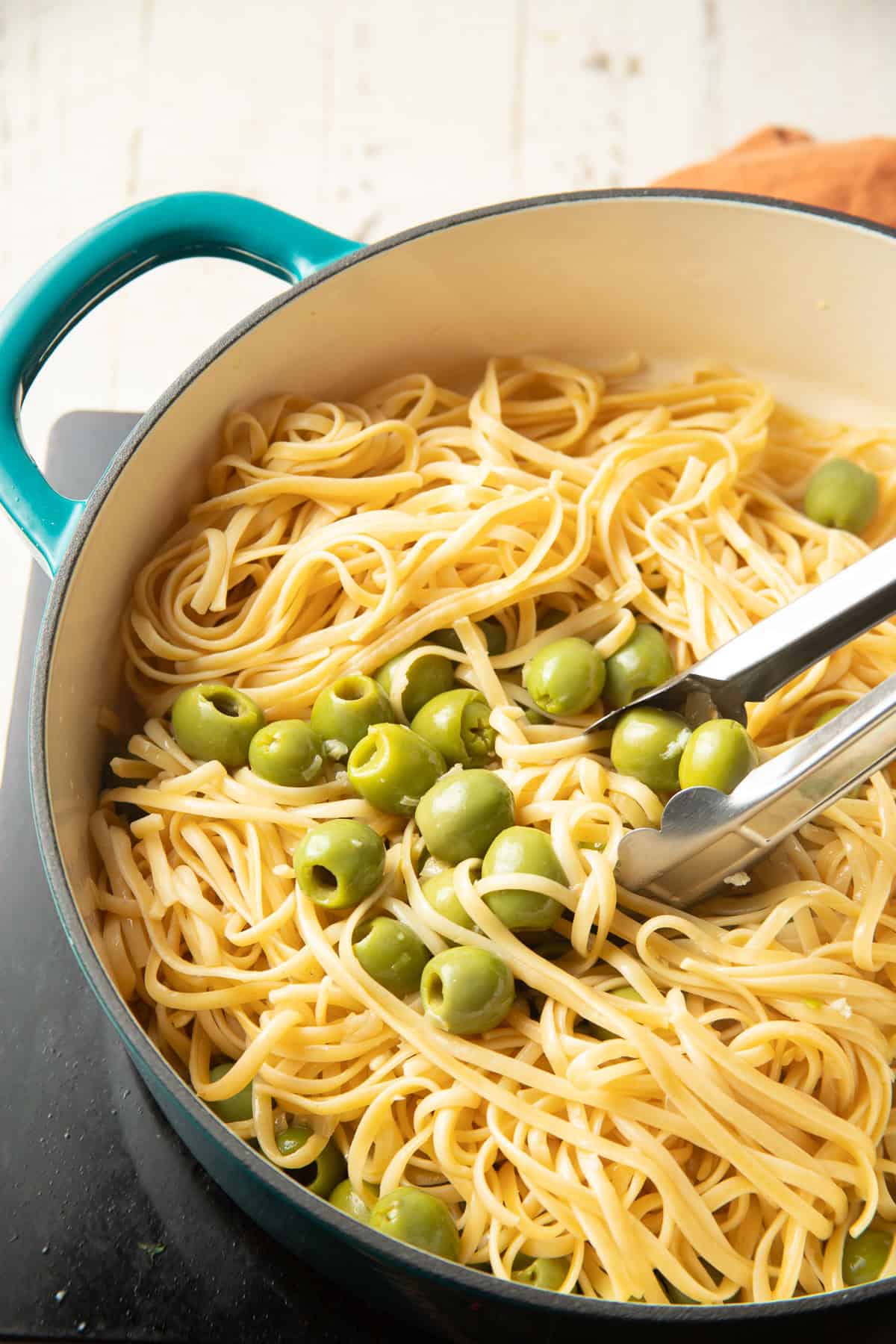
Step 5: Heat olives and pasta. Add both to the skillet, along with a bit of your reserved pasta water. Cook everything for a minute or two, to heat the olives.
Tip: If your pasta isn't finished by step 5, don't worry! Just take the skillet off the heat. Once the pasta is ready, resume cooking where you left off.
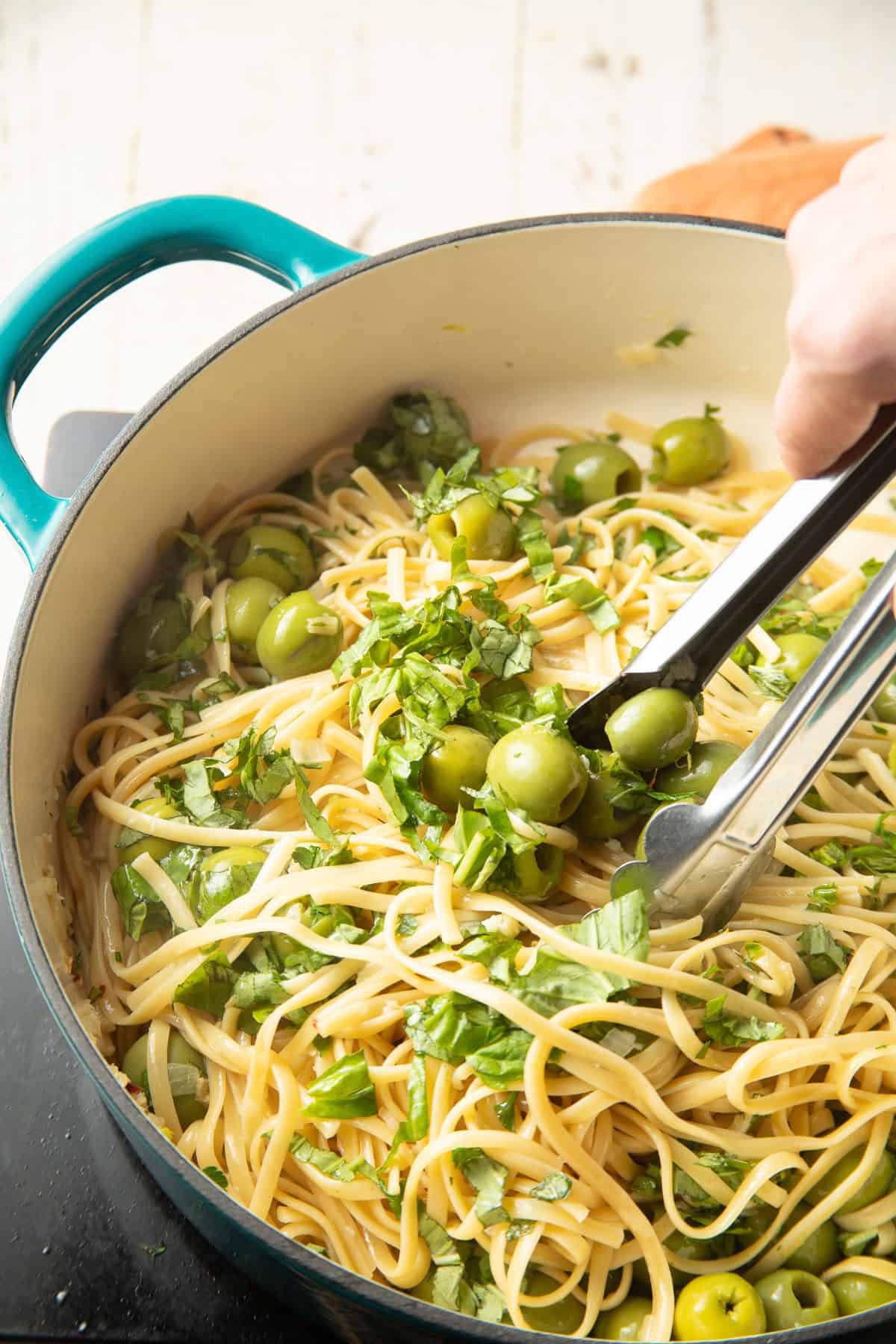
Step 6: Finish the dish. Take the skillet off the heat, then add the lemon juice, lemon zest, basil, parsley, and black pepper. Taste the dish (make sure to get both some pasta and olives on your fork!), and add salt only if needed.
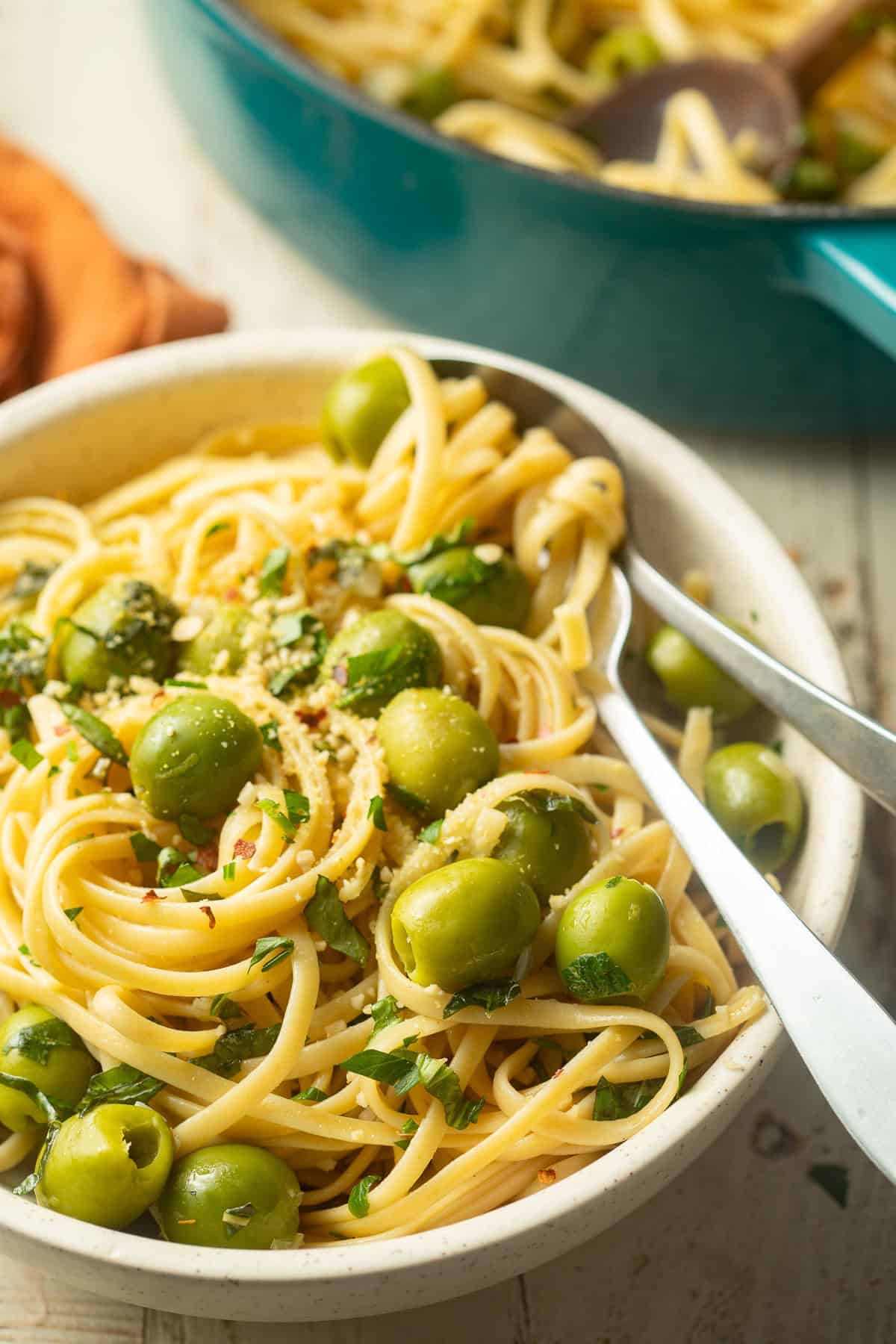
Step 7: Serve. Your green olive pasta is ready to enjoy! Divide it onto plates or into bowls. I like to sprinkle mine with some homemade vegan Parmesan cheese, but the dish is just as delicious without it.
Variations
- Green and black olive pasta. You can replace up to half of the green olives with black olives. I recommend sticking with a mild variety like Niçoise, but feel free to use what you like!
- Add veggies. Throw in some sautéed or roasted cauliflower, mushrooms, eggplant, or asparagus. You can also add some tender greens like spinach or arugula during step 5, and continue to cook until they wilt.
- Sun-dried tomatoes. Make this an olive tapenade-inspired meal, and add some julienne-cut sun-dried tomatoes for a burst of sweet and smoky flavor.
Frequently Asked Questions
Yup! Use your favorite variety of gluten-free pasta and you're there.
You certainly can, if you prefer! Simply skip step 4. No need to replace it with anything.
A simple salad is a great option. My balsamic beet salad and vegan antipasto salad would both go well with this dish. Roasted vegetables such as garlic roasted asparagus or roasted radishes also make great sides. Bread is also a nice option, and if you really want to go crazy with the olives for your meal, try my olive rosemary focaccia bread.
Leftover green olive pasta will keep in an airtight container in the fridge for about 3 days. Add a splash of water if it seems dry when you reheat it.


Like this recipe? If so, please stop back and leave me a review and rating below if you try it! Also be sure to follow me on Facebook, Pinterest or Instagram, or subscribe to my newsletter for more recipes like this one!
📖 Recipe
Green Olive Pasta
Ingredients
- 12 ounces dried linguine pasta
- 3 tablespoons olive oil
- 1 small shallot, finely chopped (about ¼ cup)
- 4 garlic cloves, minced
- ¼ teaspoon crushed red pepper flakes, or to taste
- ¼ teaspoon fennel seeds, crushed (Note 1)
- ¼ cup dry white wine
- 2 cups Castelvetrano olives (Note 2)
- 2 tablespoons lemon juice
- 1 teaspoon lemon zest
- ½ cup chopped fresh basil
- ¼ cup chopped flat leaf parsley
- ½ teaspoon black pepper
- Salt, to taste
Instructions
- Bring a large pot of salted water to a boil. Add the pasta and cook it according to the package directions, just until al dente. Reserve about ½ cup of the pasta cooking water, then drain the rest into a colander.
- While the pasta cooks, coat the bottom of a large skillet or shallow pot with the olive oil and place it over medium heat. Once the oil starts to shimmer, add the shallot. Cook the shallot for about 4 minutes, stirring frequently, until it becomes soft and translucent.
- Stir in the garlic, red pepper flakes, and fennel. Cook the mixture for another minute, stirring constantly, until the garlic becomes very fragrant.
- Add the wine and bring it to a gentle simmer. Let it continue to simmer for about 3 minutes, until the volume has reduced by about half.
- Add the cooked pasta (Note 3) and olives to the skillet. Add a few splashes of your pasta cooking water and cook the mixture for 1 to 2 minutes, just until the olives are heated through. Add more of the pasta cooking water if it becomes too dry.
- Remove the skillet from heat, then stir in the lemon juice, lemon zest, basil, parsley, and black pepper. Season the mixture with salt to taste, keeping in mind that it may already be salty from the olives.
- Divide onto plates and serve.
Notes
- The seeds only need to be broken up — not completely pulverized. I simply place them on a cutting board and smash them with the bottom of a measuring cup.
- This is a lot of olives! You'll get an olive in every bite if you use the full amount. If this seems like a lot for you, feel free to start with just one cup. You can always add more.
- If your pasta isn't done yet, simply turn off the heat and pause cooking until it's ready.
Would you like to save this?
Nutrition
Nutrition information is provided as an estimate only and may vary based on ingredients, brands, portion sizes, and preparation methods.


Absolutely divine! What a fabulous recipe. Bright, vibrant, tangy and so fresh. Even better the next day cold from the refrigerator. Perfect for summer. Thank you for sharing!
I too love olives.
I will DEFINITELY be making this mouth watering recipe - once I restock my olive pantry.of olives. They don't last long around here. I make a batch of mufalletta spread every other week and use it on cucumber sandwiches, roasted veggies subs, and on the top of my weekly hummus. Why not?
Love your recipes so.much. can't wait to try this.
Thàaank you so much!!!
Wilma