

These tempeh noodles are made with crispy, pan-fried tempeh strips smothered in a sweet-and-savory glaze, then served with a mix of fresh and stir-fried veggies over warm noodles in a light peanut sauce. They're hearty, comforting, and perfect for meal prep or easy weeknight dinners.

I love doing all kinds of creative things with tempeh. I make it into tempeh bacon, tempeh ribs, and even tempeh burgers. All delicious! But sometimes it's nice to just let tempeh be tempeh. Tempeh is a staple in Indonesian cuisine, and in Indonesia, you're not likely to find it masquerading in the form of a meat substitute. Instead, you might find it fried and seasoned with ingredients like sweet soy sauce, chili paste, and aromatic spices. That's exactly how I prepared it for these tempeh noodle bowls!
Jump to:
I'm not going to pretend this recipe is 100% authentic Indonesian cuisine, but it's definitely inspired by it, and it's some of the tastiest tempeh I've ever eaten!
Kecap manis, also known as sweet soy sauce, is the star seasoning, and it caramelizes beautifully on pan-fried tempeh strips, giving them delightful crispy edges and amazing flavor. This tempeh is scrumptious on its own, but here we're serving it over warm noodles tossed in a sweet-and-savory peanut sauce with stir-fried cabbage and bell pepper. Juicy cherry tomatoes and crisp cucumber strips add the perfect fresh contrast. It's the most amazing blend of flavors and textures, and I know you're going to love it.
Ingredients You'll Need
Below you'll find a list of ingredients in this recipe, with notes and substitutions. Scroll all the way to the bottom of the post to see the full recipe, including the amount of each ingredient.
- Noodles. You can really use any variety of noodles here, as long as they're vegan. I recommend wheat noodles, and I developed the recipe with ramen noodles. Lo mein and yakisoba noodles are fine (check the ingredients for eggs), and even spaghetti will work in a pinch.
- Kecap manis. This is an Indonesian sweet soy sauce. You can buy it in an Asian market or online, and I've included a link in the recipe card. A mix of regular soy sauce with some sugar will work if you can't find kecap manis.
- Lime juice. Stick with freshly squeezed lime juice for the best flavor.
- Sambal oelek. This is an Asian chili paste that a lot of regular supermarkets carry in the international aisle. You can also get it in an Asian market, or substitute sriracha if needed.
- Peanut butter. Stick with peanut butter that's natural (runny) and creamy (not chunky). This will give your sauce the best texture and flavor.
- Soy sauce.
- Water.
- Vegetable oil. Any neutral high heat oil will work, such as peanut, canola, or avocado oil.
- Tempeh.
- Green cabbage. Red cabbage is fine, if you prefer it.
- Red bell pepper.
- Garlic.
- Cherry tomatoes. Feel free to dice up a large tomato instead.
- Cucumber.
- Scallions.
- Cilantro.
Tip: To make this dish gluten-free, substitute rice noodles or 100% buckwheat soba noodles and use gluten-free tamari in place of the soy sauce. In place of the kecap manis, use 3 tablespoons of gluten-free tamari and 1 tablespoon of organic sugar.
How It's Made
Below is a detailed photo tutorial on how to make this dish. Scroll all the way down if you'd like to skip right to the recipe!
Steps 1 and 2: Prepare. Start your noodles — you'll just cook them until al dente. Mix the kecap manis, lime juice, and sambal oelek in a small bowl. You'll add the rest of the sauce ingredients later.

Steps 3-5: Prepare and cook the tempeh. Slice the block into thin strips while you heat some oil in a skillet. Add your tempeh strips to the skillet and cook them for a few minutes on each side, until golden. Pour the sauce over them and cook them about 2 minutes longer, until the sauce is thick and caramelized on the tempeh. Remove them from the skillet.
Tip: If you normally find tempeh too bitter for your taste, try steaming it before cooking. This tutorial on how to steam tempeh will tell you exactly what to do.
Step 6: Finish the sauce. Whisk in the peanut butter and soy sauce, then thin it with a bit of water.
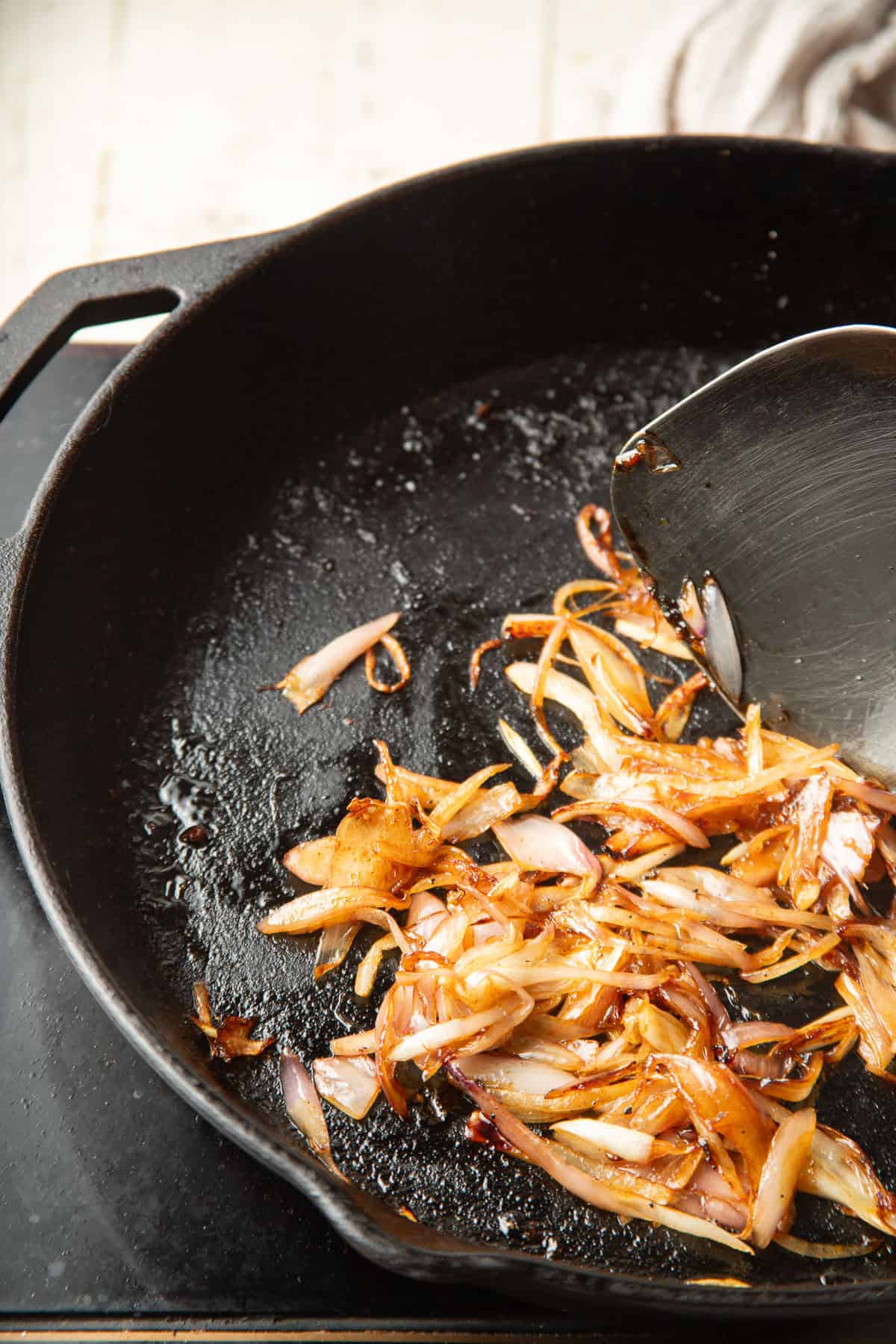
Step 7: Cook the shallots. Add some more oil to the skillet, let it heat up, then add sliced shallots. Cook them for a few minutes, stirring often, just until they soften and start to brown. Take them out of the skillet when they're done.
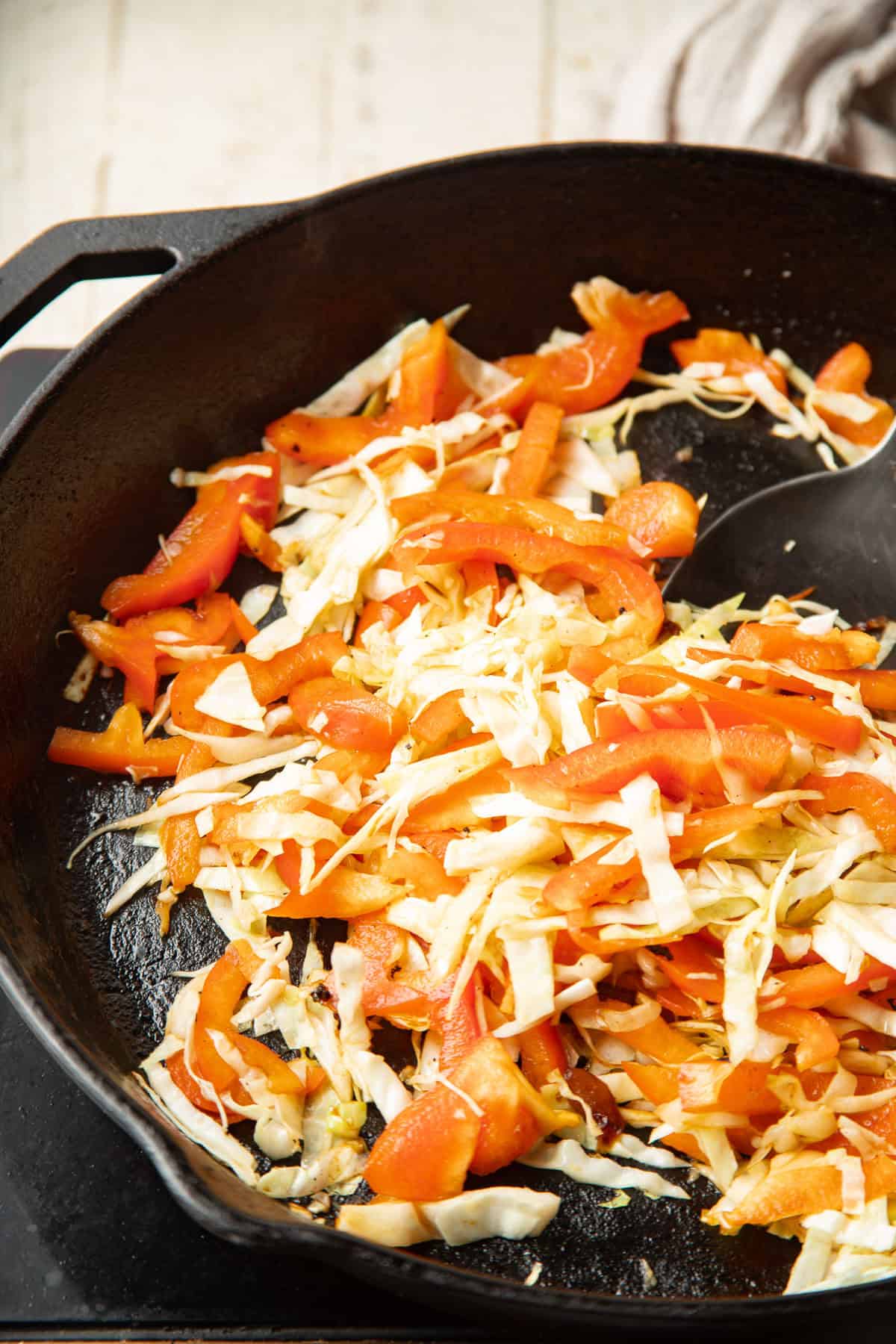
Step 8: Cook the veggies. You can add more oil to the skillet if needed, then add your cabbage and pepper. Stir-fry the veggies for a couple of minutes until they become tender-crisp.
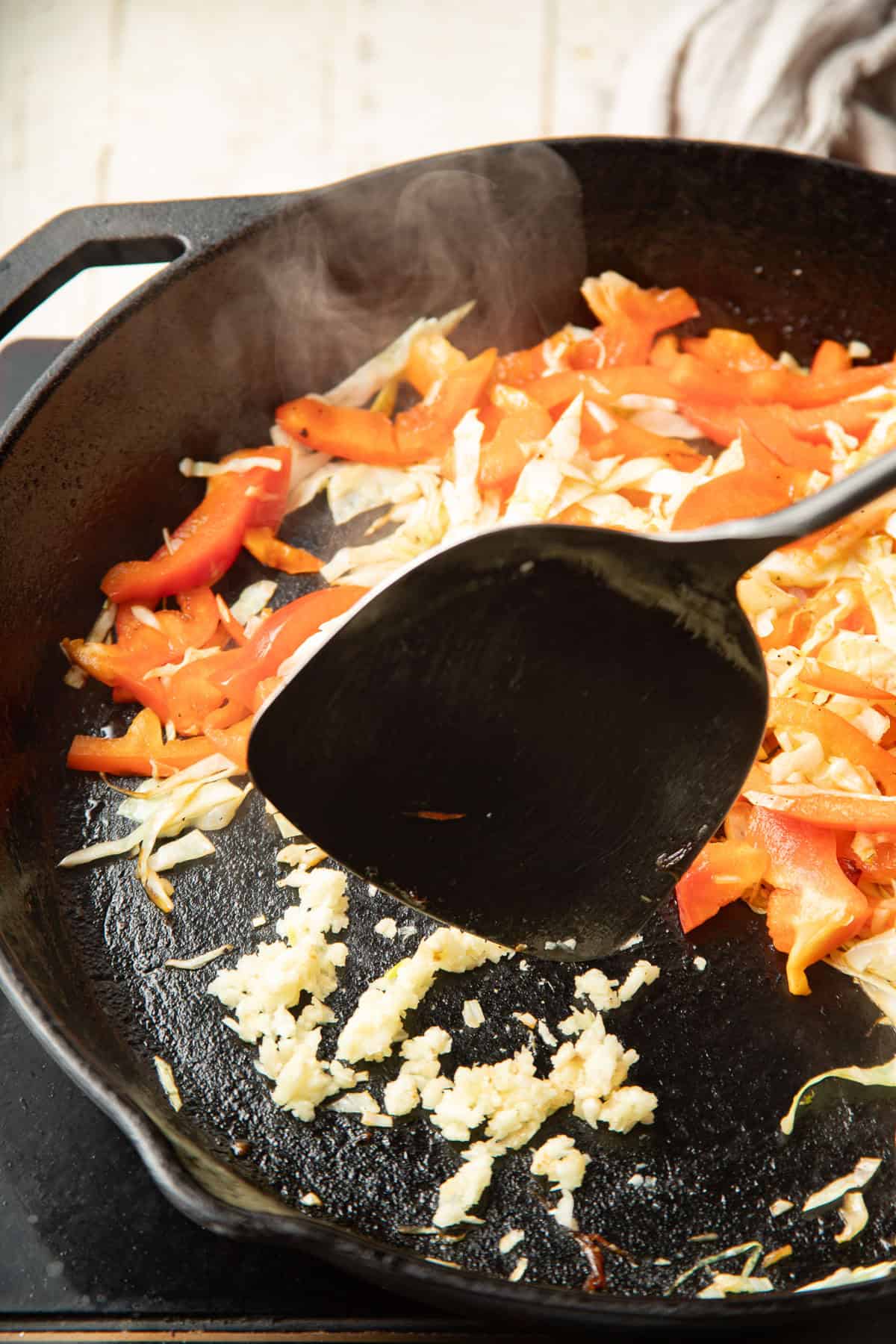
Step 9: Cook the garlic. Push the cabbage and pepper aside, then add your minced garlic to the skillet. Cook it very briefly, stirring the whole time to prevent burning, until it gets very fragrant.
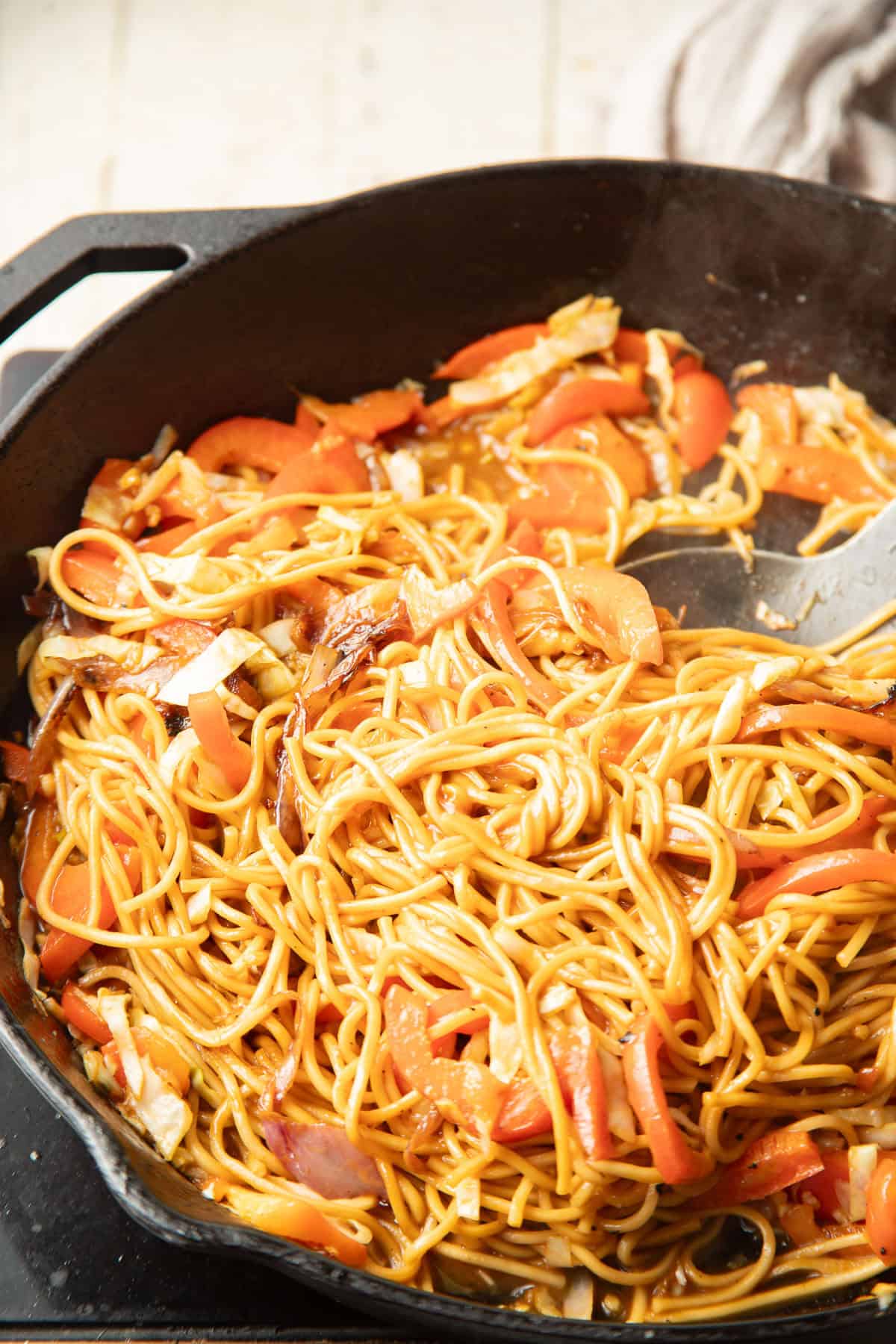
Step 10: Add the noodles and sauce. Add the noodles first, along with the cooked shallots, then the sauce. Cook everything for a minute or two until it's hot, and the noodles are nicely coated in sauce.
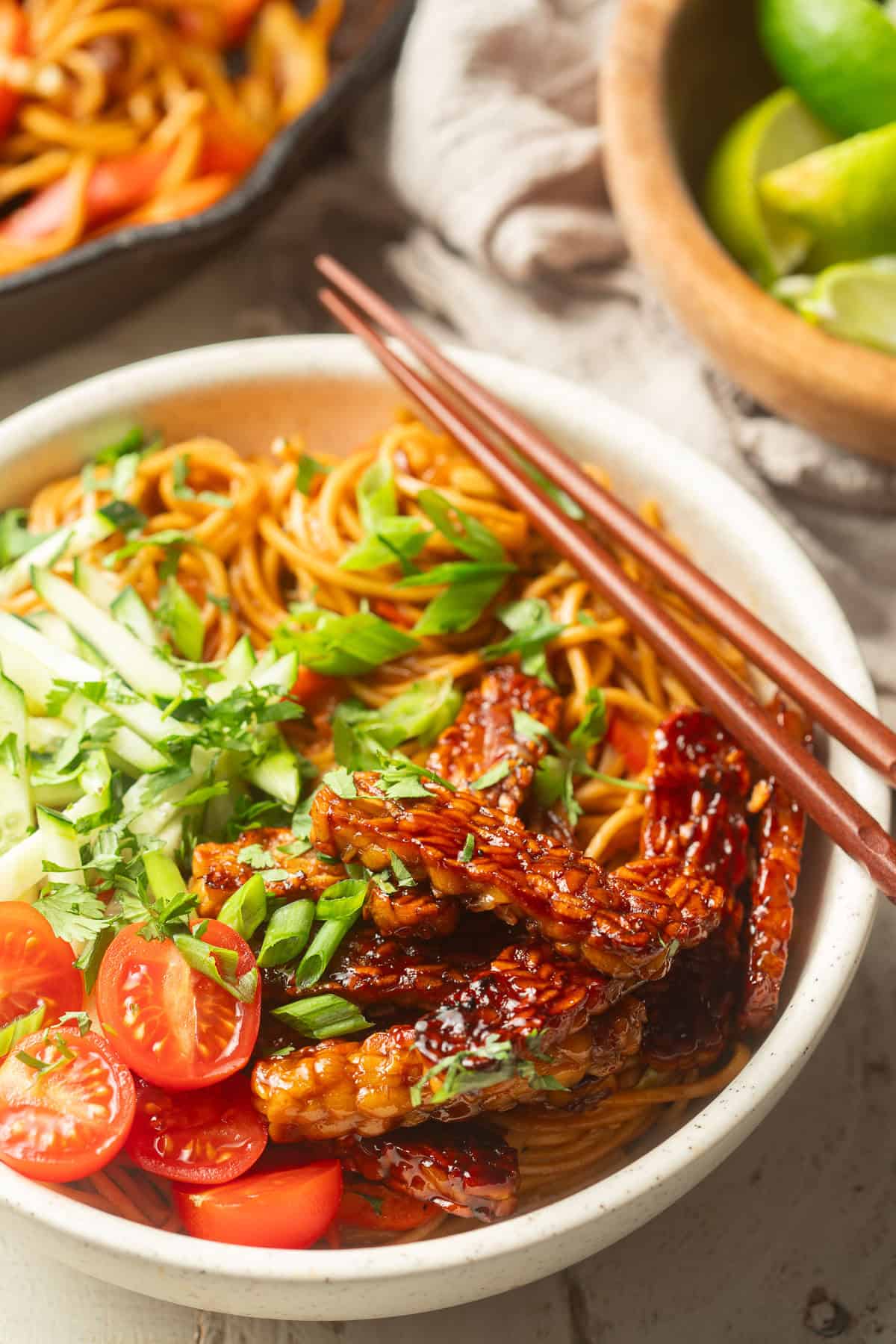
Step 11: Finish and serve. Take the skillet off the heat, then split the noodles up among bowls. Add your tempeh, halved cherry tomatoes, and julienne-cut cucumber, then sprinkle everything with chopped scallions and cilantro. Dig in right away!
Variations
- Rice bowls. Instead of noodles, add some leftover cooked rice to the skillet in step 10. Do everything else exactly the same. You'll end up with a peanut-flavored fried rice base for the tempeh and veggies.
- Veggie swaps. Replace the cabbage and peppers with broccoli, cauliflower, asparagus, or snap peas. Replace the tomatoes and cucumbers with carrots, radishes, or fresh greens.
- Add toppings. The sky is the limit here! Add sliced avocado, chopped peanuts, toasted sesame seeds, chili crisp, or basically whatever sounds good to you.
Leftovers, Storage & Meal-Prep
If possible, store the components of this recipe separately — noodles in one airtight container, raw veggies in another, herbs in another, and tempeh in another. Everything will keep in the fridge for 3 to 4 days. The noodles can be reheated in a skillet on the stove or in the microwave, adding a splash of water if the sauce has gotten dry. The tempeh is best reheated in the microwave.
You can prep everything completely in advance if you like, then just reheat and assemble before serving. Alternatively, mix the sauce, prep the veggies, mince the garlic, then just do the cooking parts of the recipe before serving.
More Tempeh Recipes



Like this recipe? If so, please stop back and leave me a review and rating below if you try it! Also be sure to follow me on Facebook, Pinterest or Instagram, or subscribe to my newsletter for more recipes like this one!
📖 Recipe

Sweet & Spicy Tempeh Peanut Noodle Bowls
Ingredients
- 6 ounces dried wheat noodles, such as ramen noodles
For the Sauce
- ¼ cup kecap manis (sweet soy sauce, Note 1)
- 2 tablespoons lime juice
- 2 teaspoons sambal oelek
- 2 tablespoons creamy natural peanut butter
- 1 tablespoon soy sauce
- 2 tablespoons water, or as needed
For the Bowls
- 2 tablespoons vegetable oil, divided, plus a dash more if needed
- 1 (8 ounce/227 gram) package tempeh
- 2 cups sliced green cabbage
- 1 cup sliced shallots
- 1 medium red bell pepper, sliced into strips
- 3 garlic cloves, minced
- 1 cup cherry tomatoes, halved
- ½ medium cucumber, julienned
- 2 scallions, chopped
- ¼ cup chopped fresh cilantro
Instructions
- Bring a large pot of salted water to a boil. Add the noodles and cook them according to the package directions, until al dente. Drain them into a colander when they're done.
- Make the sauce while the noodles cook. First whisk together only the kecap manis, lime juice, and sambal oelek. You will add the other sauce ingredients later. Set the mixture aside for now.
- Place a large skillet over medium heat, then add 1 tablespoon of the oil. Swirl it around to coat the bottom of the skillet, then let the oil heat up for a minute.
- Cut the tempeh into about 18 thin strips (cut parallel to the short side), while the oil heats up.
- Add the tempeh strips to the skillet in a single layer. Cook them for about 4 minutes on each side, until golden brown and crispy. Carefully pour only about half of the sauce over the tempeh strips. Cook them for about 2 minutes longer, flipping once, until the sauce thickens and caramelizes on the tempeh strips. Remove the tempeh from the skillet and transfer it to a plate.
- Whisk the peanut butter and soy sauce into the remaining sauce, then thin the mixture with 2 tablespoons of water, or as much as you need to make it easily pourable.
- Add the remaining tablespoon of oil to the skillet and raise the heat to medium-high. Give the oil a minute to heat up, then add the shallots. Cook the shallots for about 4 minutes, stirring frequently, until they soften and begin to crisp around the edges. Remove the shallots from the skillet and transfer them to the plate with the tempeh.
- Add a dash more oil to the skillet if it seems dry, then add the cabbage and bell pepper. Cook the veggies for about 2 minutes, stirring constantly, until they brighten in color and become tender-crisp.
- Push the cabbage and pepper to the sides of the skillet, then add the garlic. Sauté the garlic for about 30 seconds, stirring constantly, until it becomes very fragrant.
- Add the cooked noodles and shallots to the skillet, then carefully pour the sauce over them. Cook the noodles and veggies in the sauce for 1 to 2 minutes, until everything is heated and the sauce clings to the noodles.
- Remove the skillet from heat. Divide the noodles among 3 bowls, then top the noodles with the tempeh, cucumber, and cherry tomatoes. Sprinkle each bowl with scallions and cilantro, then serve immediately.
Notes
- If you can't find kecap manis, substitute 3 tablespoons of soy sauce and 1 tablespoon of organic granulated sugar.
Would you like to save this?
Nutrition
Nutrition information is provided as an estimate only and may vary based on ingredients, brands, portion sizes, and preparation methods.


Just made this for dinner tonight. So delicious! I will definitely be adding this to the rotation.