

This vegan bibimbap is surprisingly easy to make at home, and it tastes like it came from a restaurant. Made with a mix of sesame-garlic veggies and tofu over a bed of rice, then drizzled with spicy gochujang sauce, these Korean-inspired bowls are super satisfying and packed with bold, fiery flavor!
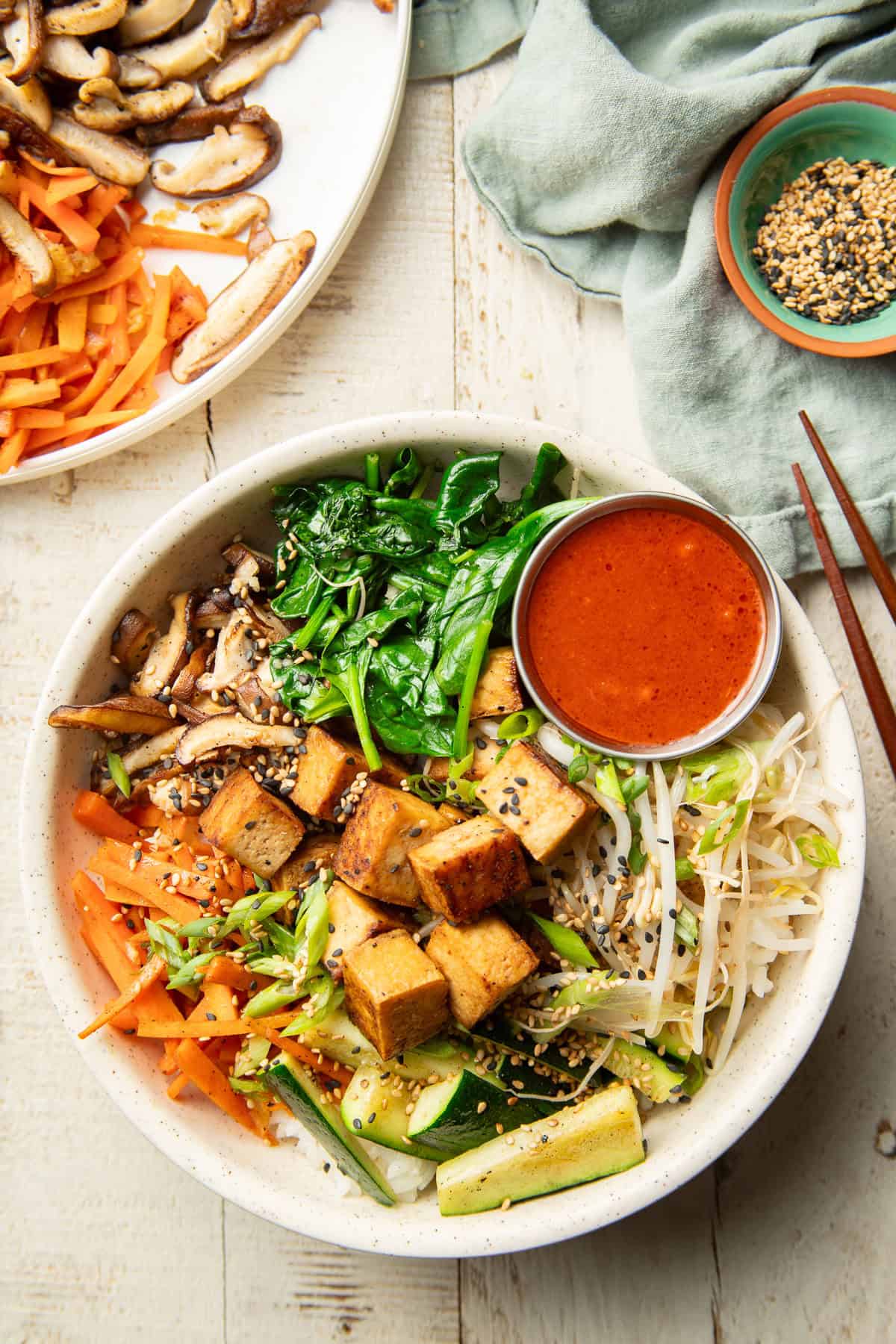
Bibimbap is one of my favorite dishes to order at Korean restaurants. Have you had it? Think: a bed of fluffy, short-grain rice, a vibrant mix of garlicky, lightly cooked veggies, pan-fried tofu, and (the best part!) a spicy, tangy red pepper sauce that I’d happily eat by the spoonful.
Jump to:
I love cooking Korean dinners at home, but I usually gravitate toward simpler dishes like my vegan kimchi stew and vegan bulgogi. Vegan bibimbap always seemed too complicated to make at home. But I was wrong.
Yes, bibimbap involves a lot of veggies, plus tofu and rice — but it’s all about efficiency. All the veggies and the tofu cook in the same skillet, one after the other, and they come together quickly, so the dish doesn’t take much time. And best of all? Everything keeps well, so you can totally meal prep these badboys.
Ingredients You'll Need
Below you'll find a list of ingredients in this recipe, with notes and substitutions. Scroll all the way to the bottom of the post to see the full recipe, including the amount of each ingredient.
- Rice. Bibimbap is traditionally made with short-grain rice, but you can use pretty much any variety. Sushi rice works particularly well, and is a short grain variety.
- Gochujang. This is the main ingredient in bibimbap sauce. It's a spicy, fermented Korean red pepper paste. Some supermarkets will carry it in the international aisle. If you can't find it there, try an Asian market or by online.
- Toasted sesame oil. This oil is for flavoring (not cooking). It's a key seasoning in bibimbap, and can be found in the international aisle of most grocery stores.
- Rice vinegar. This will also be available in the international section of the store.
- Brown sugar. We're using organic brown sugar to keep the recipe vegan. Conventional brown sugar is often processed with animal bone char.
- Garlic.
- Vegetable oil. You can use any neutral high-heat oil you like to cook with, like peanut, corn, or canola oil.
- Tofu. Super-firm tofu is my favorite, so it's what I use for this recipe. Firm or extra-firm will also work, but you'll need to press it before cooking.
- Soy sauce. Liquid aminos and tamari also work here.
- Vegetables. You'll need shiitake mushrooms, carrots, zucchini, spinach, and bean sprouts.
- Scallions. Also known as green onions.
- Toasted sesame seeds. White or black seeds can be used.
How It's Made
Below is a detailed photo tutorial on how to make this dish. Scroll all the way down if you'd like to skip right to the recipe!
Step 1: Cook the rice. Get this started first, since it takes the longest. Simply follow the package directions.
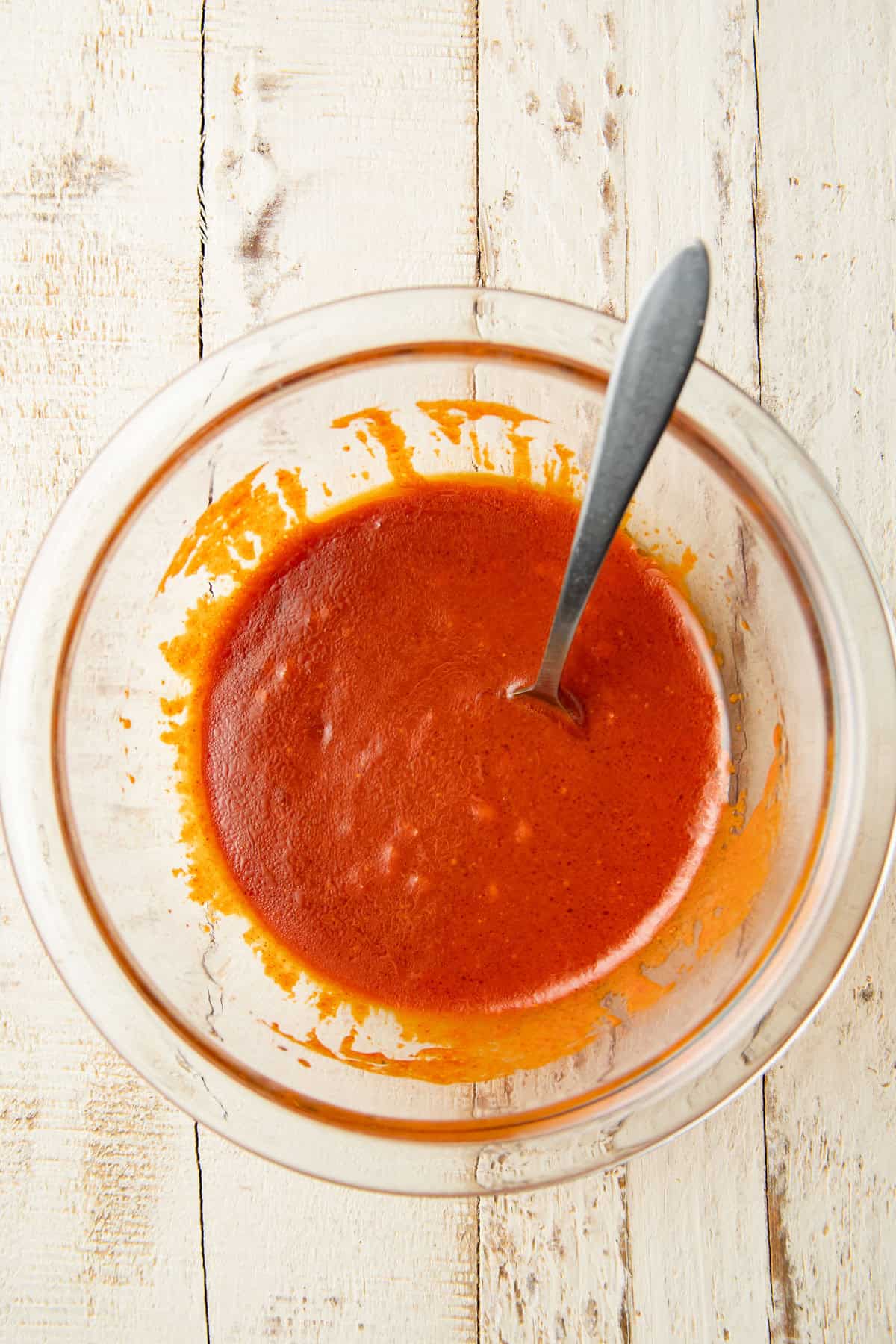
Step 2: Make the sauce. Stir gochujang, toasted sesame oil, rice vinegar, brown sugar, water, and minced garlic together in a small bowl. Set it aside for now.
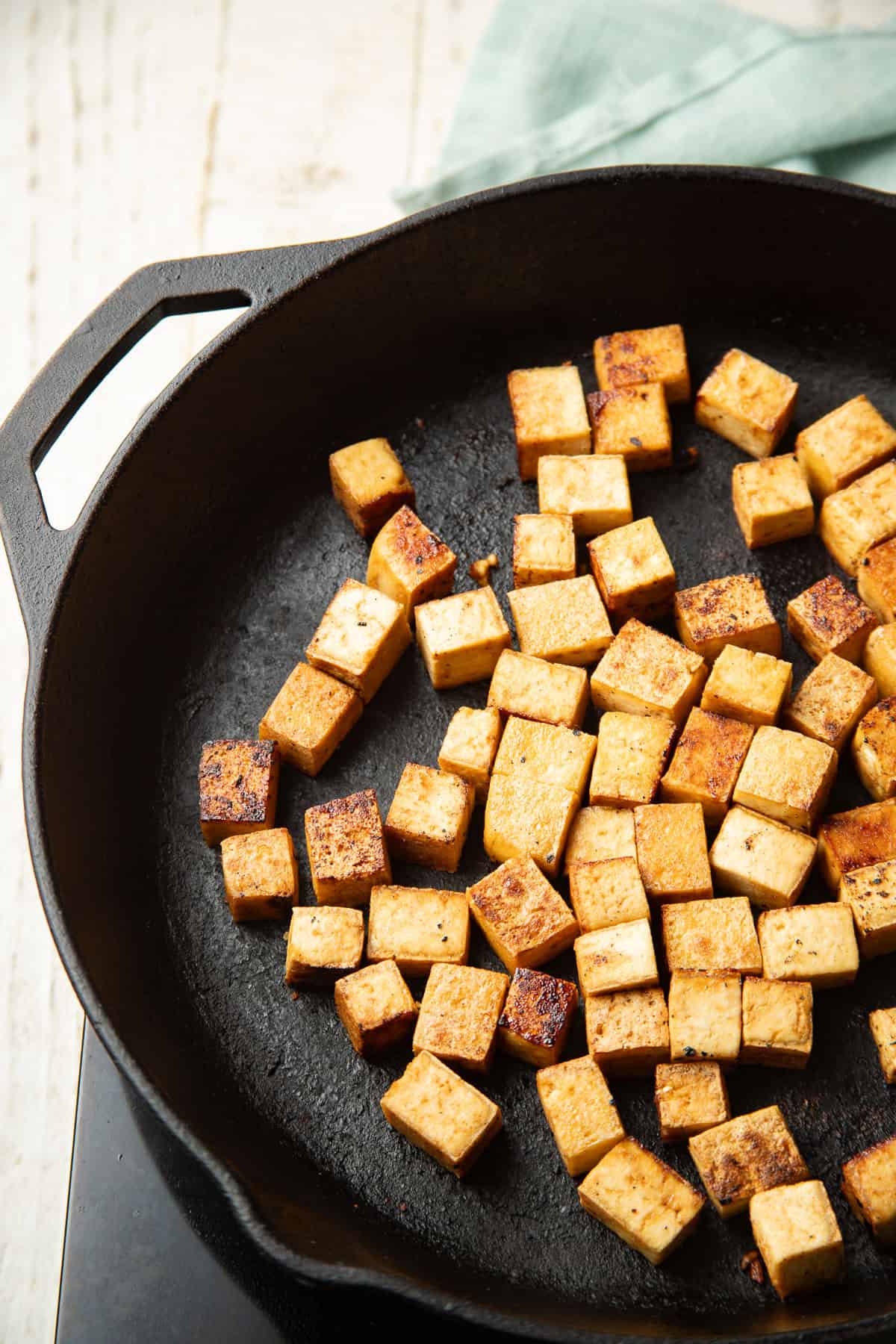
Steps 3 & 4: Cook the tofu. Heat some oil in a skillet, then add the cubes. Cook them until they're browned and crispy, flipping once. Next, drizzle them with a mix of soy sauce, toasted sesame oil, and brown sugar, then continue cooking until it dries up. Move the tofu to a plate.
Step 5: Heat some water. Just place a small pot on the stove to start heating up. You'll use it later for the sprouts.
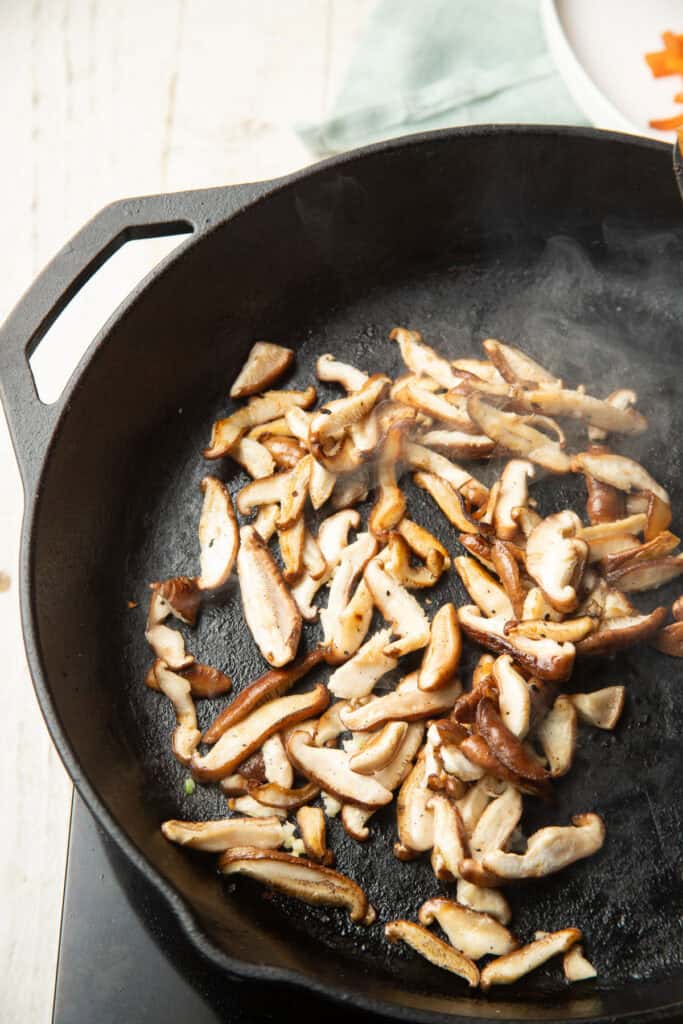
Step 6: Cook the mushrooms. Add some more oil to the skillet, then the mushrooms and a little salt. Cook them until they're tender, then finish with a bit of sesame oil and minced garlic. Cook them another 30 seconds, then move them to a plate.
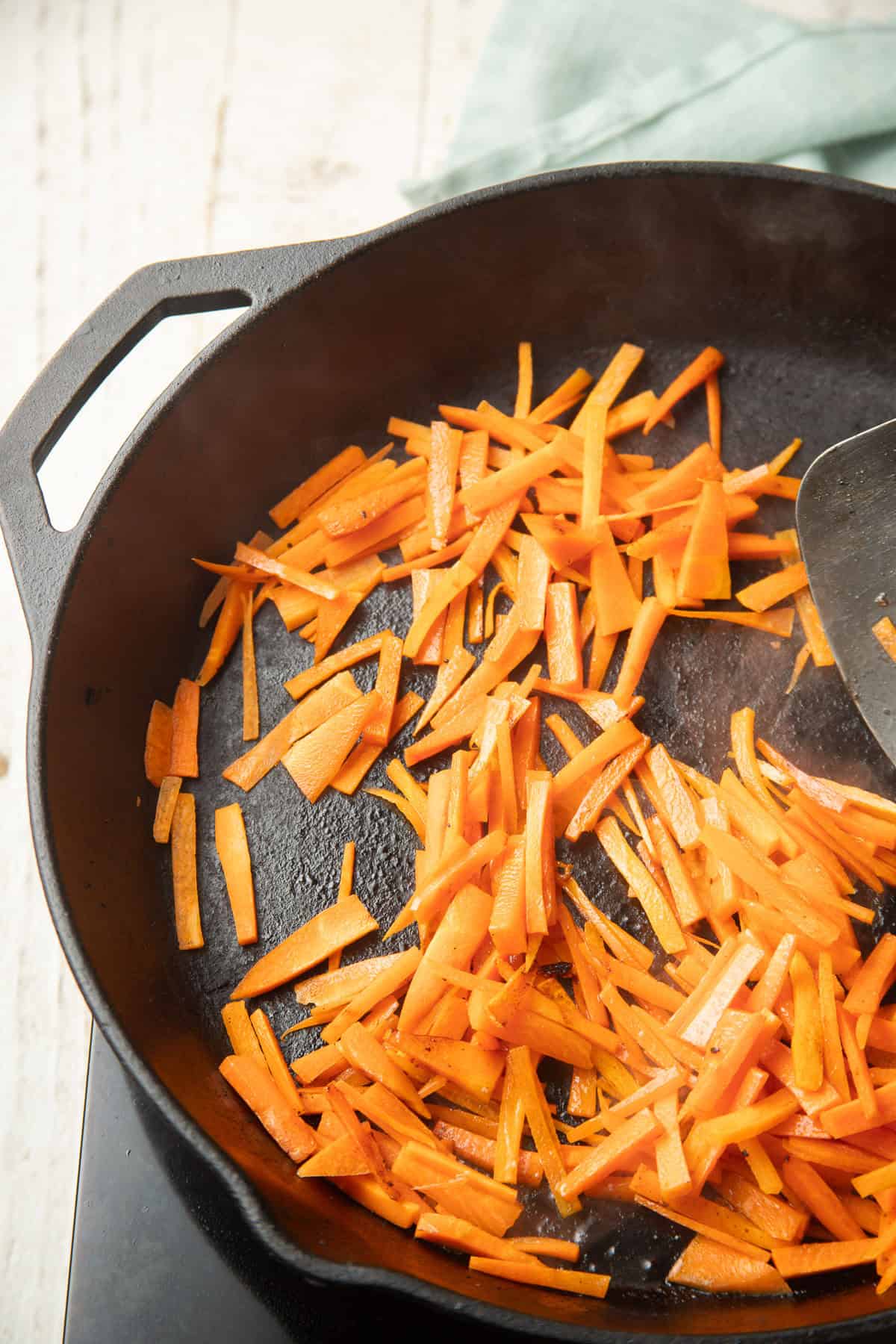
Step 7: Cook the carrots. Julienne cut carrots go into the skillet next. They'll cook for just 2 minutes. Add some sesame oil and minced garlic, then cook another 30 seconds.
Tip: The mushrooms, carrots, zucchini, and spinach all cook using similar methods and seasonings. Feel free to cook multiple veggies in different parts of your skillet at once, if you've got the space.
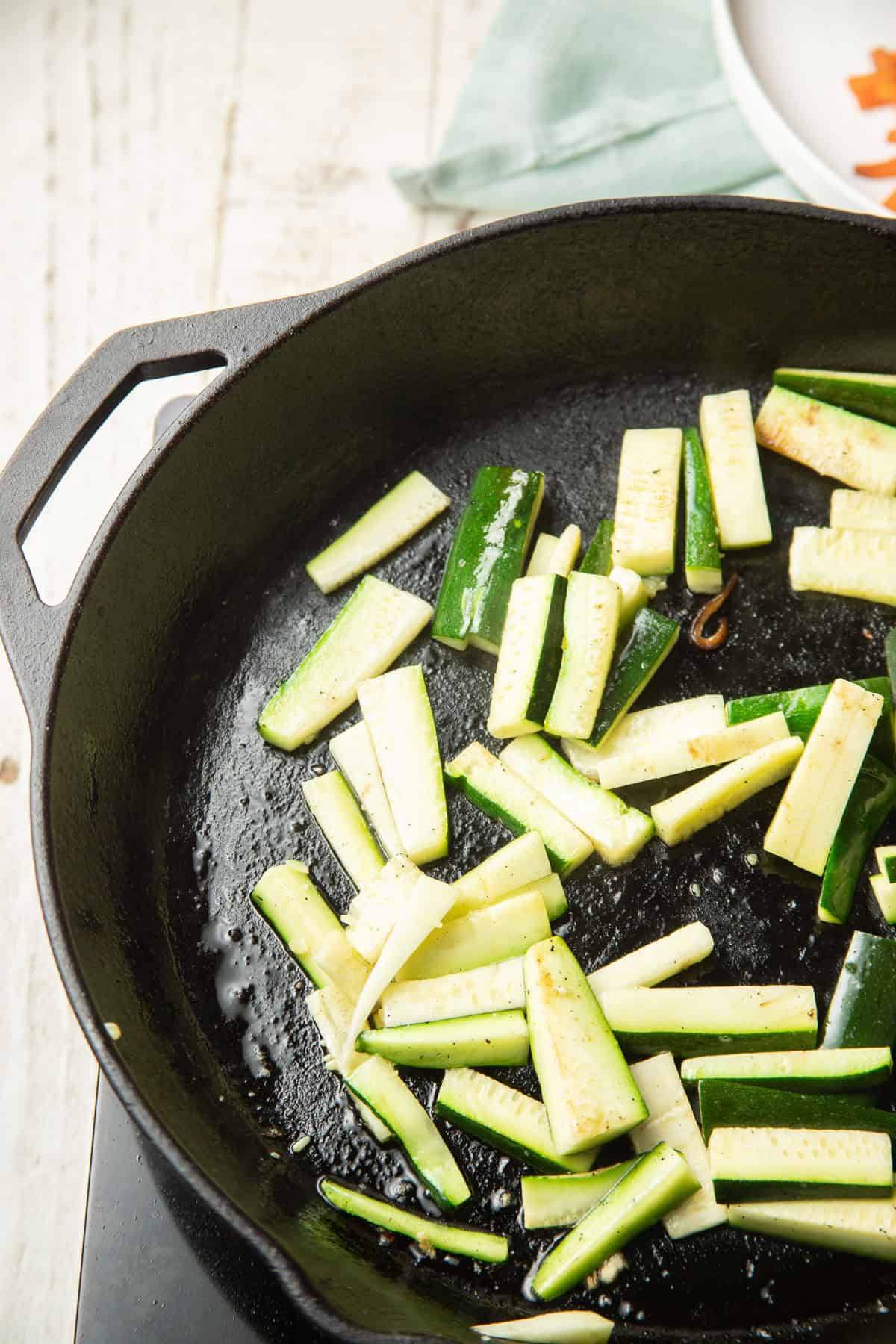
Step 8: Cook the zucchini. Same process as the carrots. Use a teaspoon more oil, cook the zucchini batons for 3 minutes alone, then with garlic and sesame oil for 30 seconds.
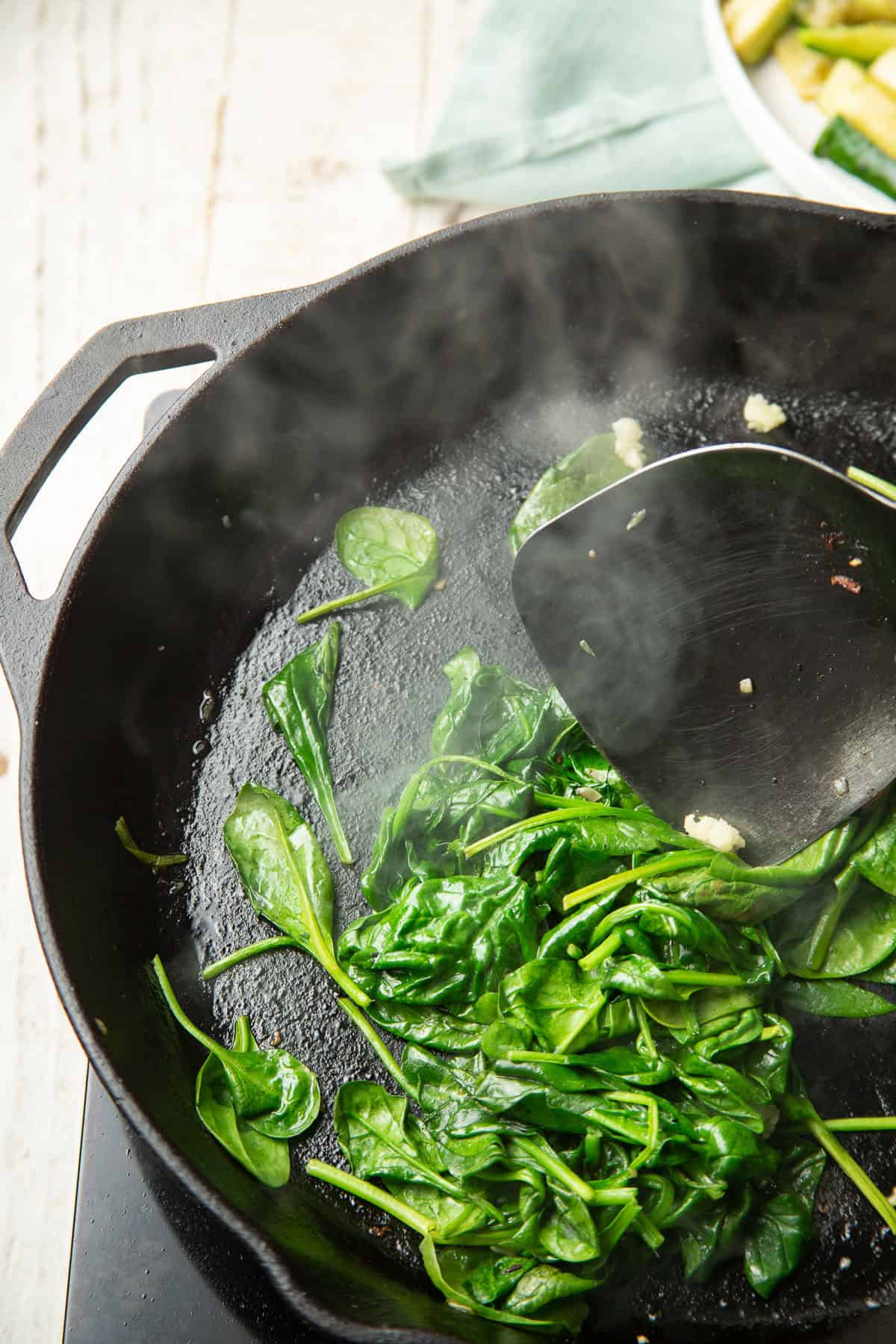
Step 9: Cook the spinach. Again, start by cooking it alone, then finish with sesame oil and garlic. The spinach will only take a minute or two to wilt.
Step 10: Cook the bean sprouts. Your water should have boiled by now. Take it off the heat, then add the sprouts and blanch them for about a minute. Drain, rinse with cold water, and season them with some sesame oil.
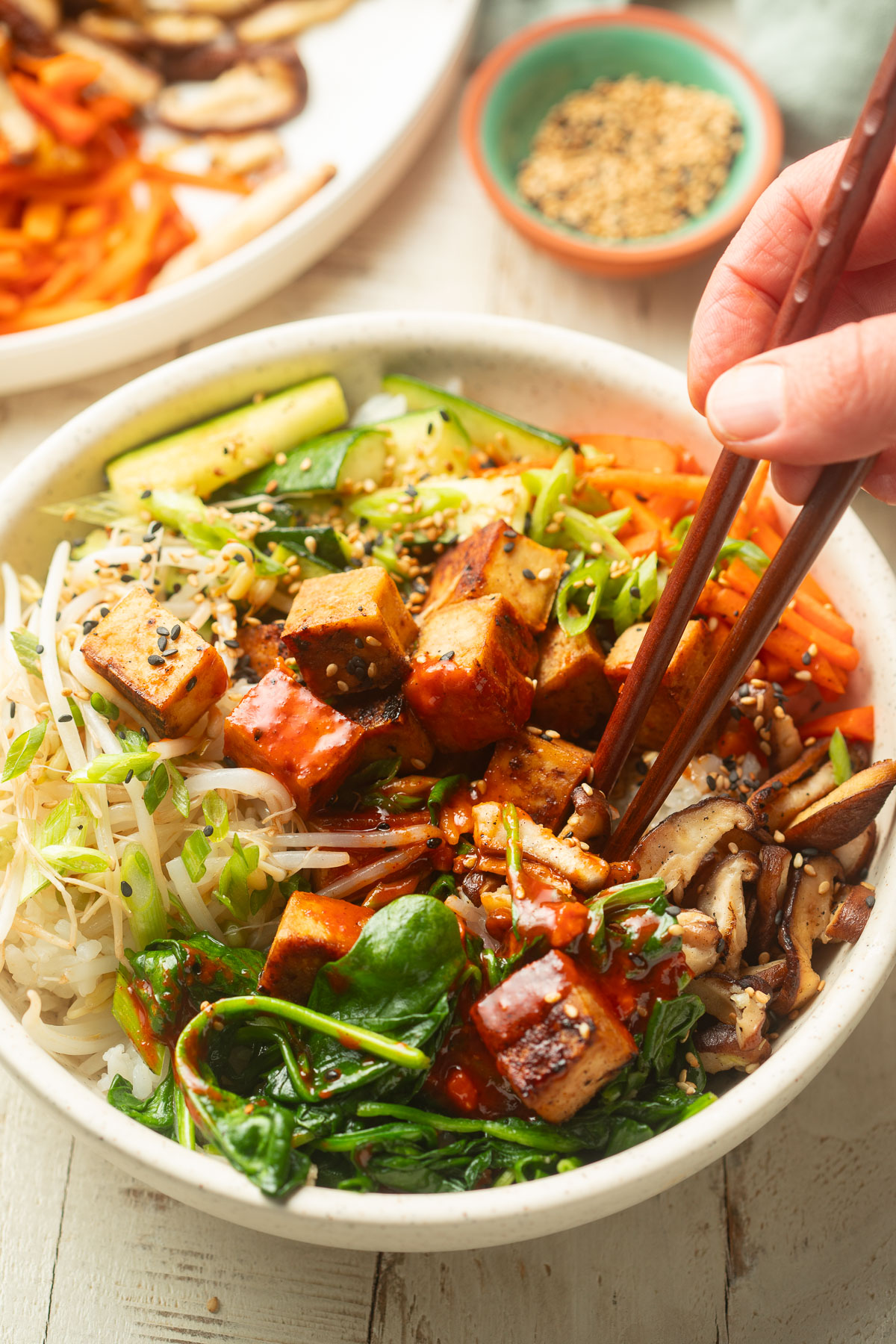
Step 11: Serve. Divide everything into bowls, starting with the rice, then tofu and veggies, bean sprouts, chopped scallions, and sesame seeds. Serve with the sauce on the side, then let your guests drizzle their bibimbap bowls with it before enjoying.
Variations
- Dolsot bibimbap. This version is often served in restaurants. You'll need special stone bibimbap bowls, also known as dolsots. Lightly rub the insides of the bowls with oil, then place them in a cold oven. Turn the oven on to 400°F and let the bowls heat up while you cook the tofu and vegetables. Serve your bibimbap in these hot bowls and the rice will develop a crispy coating that's so, so good. Just be careful not to burn yourself!
- Protein swaps. Not into tofu? Swap it out with tempeh, seitan, or even just plain shelled edamame.
- Veggie swaps. Try replacing any of the vegetables with your favorites, like eggplant, bell pepper, snap peas, or broccoli.
Frequently Asked Questions
It can be! Use gluten-free tamari in place of soy sauce, and make sure your gochujang is gluten-free.
It is! Bibimbap sauce is spicy, and without the sauce, the dish wouldn't have much flavor. If you're looking for something milder, try one of my other tofu bowls, like my vegan poke bowls or sheet pan peanut tofu bowls.
Bibimbap is a very hearty meal, so you really don't need anything else, but it's always nice with some braised soybeans or vegan kimchi on the side.
Leftovers will keep in an airtight container in the fridge for 3 to 4 days. Store the sauce separately, if possible.
More Vegan Korean-Inspired Recipes

Like this recipe? If so, please stop back and leave me a review and rating below if you try it! Also be sure to follow me on Facebook, Pinterest or Instagram, or subscribe to my newsletter for more recipes like this one!
📖 Recipe
Vegan Bibimbap
Ingredients
- 1 cup short-grain rice
For the Bibimbap Sauce
- ¼ cup gochujang
- 2 tablespoons toasted sesame oil
- 2 tablespoons rice vinegar
- 1 tablespoon organic brown sugar
- 2 tablespoons water
- 1 garlic clove, minced
For the Tofu
- 1 tablespoon vegetable oil
- 1 (16 ounce/454 gram) package super-firm tofu, cut into ½-inch cubes
- 2 tablespoons soy sauce
- 1 teaspoon toasted sesame oil
- 1 teaspoon organic brown sugar
For the Vegetables
- 2 tablespoons vegetable oil, divided
- 8 ounces shiitake mushrooms, stems removed, caps sliced
- Salt, to taste
- 4 garlic cloves, minced, divided
- 5 teaspoons toasted sesame oil, divided
- 2 medium carrots, sliced into matchsticks
- 1 medium zucchini, sliced lengthwise into 1 to 2 inch batons
- 3 cups fresh spinach
- ½ cup bean sprouts
- 2 scallions, chopped
- Toasted sesame seeds
Instructions
- Begin cooking the rice according to the package directions.
- To make the sauce, stir all of the ingredients together in a small bowl.
- To cook the tofu, coat the bottom of a large nonstick skillet with the vegetable oil and place it over medium heat. Give the oil a minute to heat up, then add the tofu cubes, spreading them out in a single layer. Cook the tofu for about 10 minutes, flipping the pieces halfway through, until browned and crispy.
- While the tofu cooks, stir the soy sauce, toasted sesame oil, and brown sugar together in a small bowl or cup. After the tofu has browned, drizzle the soy sauce mixture over the tofu, then flip the pieces a few times to coat them in the sauce. Cook them for a minute or two longer, until most of the liquid has dried up. Remove the tofu from the skillet and transfer it to a plate.
- Place a small pot of water over high heat. Let it come to a boil while you cook the vegetables. You'll use it later to blanch the bean sprouts.
- Add a tablespoon of vegetable oil to the skillet and raise the heat to medium-high. Give it a minute to heat up, then add the sliced mushrooms and sprinkle them with a pinch of salt. Cook the mushrooms for about 4 minutes, flipping them halfway through, until tender and browned. Add about a clove of minced garlic (you can eyeball the amount if you've minced all of your garlic cloves together) and drizzle the mushrooms with a teaspoon of sesame oil. Cook about 30 seconds longer, while stirring, then transfer them to a plate.
- Heat another teaspoon of vegetable oil in the skillet, then add the carrots and a pinch of salt. Cook the carrots for about 2 minutes, stirring occasionally, until bright orange and tender-crisp. Add a clove of the garlic and a teaspoon of sesame oil. Stir and cook 30 seconds more, then transfer the carrots to a plate.
- Heat another teaspoon of vegetable oil in the skillet, then add the zucchini and a pinch of salt. Cook the zucchini for about 3 minutes, stirring occasionally, until tender-crisp. Add a clove of garlic and a teaspoon of sesame oil. Cook another 30 seconds, stirring constantly, then move the zucchini to a plate.
- Add another teaspoon of oil to the skillet. Once the oil heats up, add the spinach and a pinch of salt. Sauté the spinach for 1 to 2 minutes, just until it wilts, then add garlic and a teaspoon of sesame oil. Continue cooking the spinach for 30 seconds, then transfer it to a plate.
- To cook the bean sprouts, take the pot containing the water off the heat, then add the sprouts. Blanch them for about 1 minute, just until they start to soften. Drain them, then rinse them with cold water. Place them in a bowl and toss them with 1 teaspoon of toasted sesame oil and a pinch of salt.
- To serve, divide the rice among 4 bowls, then top each bowl with vegetables, tofu, bean sprouts, scallions, and sesame seeds. Drizzle with sauce and enjoy.


Thanks for this recipe! Your photos are great, but if you want to be more authentic, you should know that bibimbap, and most other Korean rice-based dishes, are not eaten with chopsticks. Koreans eat bibimbap with a spoon!
Thank you! And wow - I had no idea! The restaurant I used to order it at always served it with chopsticks, but now that you mention it, a spoon does seem much more practical for scraping all the crispy rice from the bottom of the bowl. :)
I know what you mean about not having the right vessel holding you back from a traditional food. I used to feel the same way about paella and then got over it and realized I was being silly. I haven't tried making bibimbap before, but this version looks so good I'm gonna have to hunt down some of that chili paste and give it a go!
Sounds delicious! Did I miss something or are you adding the tofu to the dish uncooked? Does the heat from the dolsot warm it or is it supposed to be cold?
Thank you! And you read right - the tofu goes right in, uncooked. I usually prefer my tofu pan fried, but in this dish I feel like part of the fun is in breaking up the chunks with chopsticks when mixing the sauce in. The rice and veggies should warm it up sufficiently, even more so if served in a dolsot. If you get the dolsot really hot, you can even get some of the tofu to sizzle and crisp-up. You could also certainly pan-fry it before adding it in, if that's how you prefer to roll. :)
Thank you for the speedy reply!
I really really like the recipe. What would you recommend if you can't find Gochujang? Do you think I could substitute Srirarcha?
Thank you! You could give sriracha a try - I think it would be tasty, but you might need to adjust some of the other sauce ingredients a bit. Gochujang is very tangy and much thicker than sriracha. It also has a really distinct flavor, so the sriracha version will definitely be a bit different from conventional bibimbap. I'd love to hear what you think if you give it a try. :)
I've seen some people make "faux" gochujang by using miso, korean chili powder, and sweetener. It is pretty good. But still pretty hard to do since you would still need to buy korean chili powder. You could use something else, but be careful since cayenne would be too hot, though it is the closest thing.
I could definitely see how that might work. The miso has that savory note that would otherwise be missing. Thanks for the tip!
Awesome recipe. I've used sriracha before when making this when I didn't have gochujang on hand... different taste but still a yummy addition. I'd also recommend trying bamboo shoots or daikon in this.
Thanks Michael! I never though to add bamboo shoots or daikon, but I'm a huge fan of both. I'll definitely mange to get at least one of the two in my next batch. Thanks for the idea. :)