

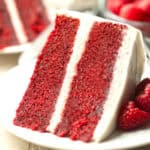
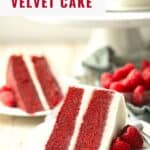
With two layers of moist, flavorful, vibrantly colored cake stuffed and slathered in luscious dairy-free ermine frosting, my vegan red velvet cake is made to impress. Perfect for everything from holidays to special dinners — or treating a hot date!

I was recently reading about how color affects our perception of taste, to a pretty amazing degree. I was a bit incredulous to learn that wine experts often can’t tell the difference between red and white wine on taste alone. Unbelievable! But after making this vegan red velvet cake… maybe there’s something to it.
Jump to:
Red velvet cake is, at its core, a fairly simple vanilla cake with just a hint of cocoa and a whole lot of red coloring. And yet — bold statement alert — I love it more than my vegan chocolate cake and my vegan vanilla cake. It’s better than the sum of its parts, and the red color is the only explanation I can come up with!
There’s another reason I love this cake. I usually dread making layer cakes. They’re a pain! But this one is pretty darn easy, as layer cakes go. You mix the dry ingredients, mix the wet ingredients, briefly beat everything together, then pour and bake. That’s it.
It sets like a dream and gets slathered in a super simple vegan ermine frosting. Also known as cooked flour frosting, ermine frosting is light, fluffy, and far less sweet than traditional buttercream.
With its gorgeous color, moist texture, and amazing flavor, this cake is absolutely made to impress.
Ingredients You'll Need
Below you'll find a list of ingredients in this recipe, with notes and substitutions. Scroll all the way to the bottom of the post to see the full recipe, including the amount of each ingredient.
- Non-dairy milk. Any unflavored and unsweetened non-dairy milk you normally drink will work. I like to use almond milk, but check out my guide to dairy-free milk if you'd like to try another variety and need guidance.
- Apple cider vinegar. Read my guide to apple cider vinegar substitutes if you need one.
- Red food coloring. This cake works best when made with conventional red food coloring. Natural alternatives, like beet-derived dyes, will give it a muddy color. Be careful, as some red food colorings are made from cochineal (bugs!), so they're not vegan. I've linked to a vegan option in the recipe card.
- Vanilla extract.
- Flour. I've only tested this recipe with all-purpose wheat flour, so I can't promise results with any other varieties.
- Sugar. We're using organic granulated sugar, since conventional sugar is often processed using animal products.
- Cocoa powder.
- Baking soda.
- Salt.
- Vegetable oil. Any neutral oil you normally use for baking will work.
- Coconut milk. This is for the frosting, and you'll be using it in addition to your other non-dairy milk. Make sure you're using full-fat coconut milk from a can — not light coconut milk and definitely not the type sold in cartons.
- Vegan butter. Most grocery stores stock this near the regular butter, in the refrigerated case.
How It's Made
Below is a detailed photo tutorial on how to make this dish. Scroll all the way down if you'd like to skip right to the recipe!
Step 1: Prepare. Preheat your oven to 350°F. Grease a couple of round 9-inch cake pans, line the bottoms with parchment paper, then grease the parchment paper, and flour everything.
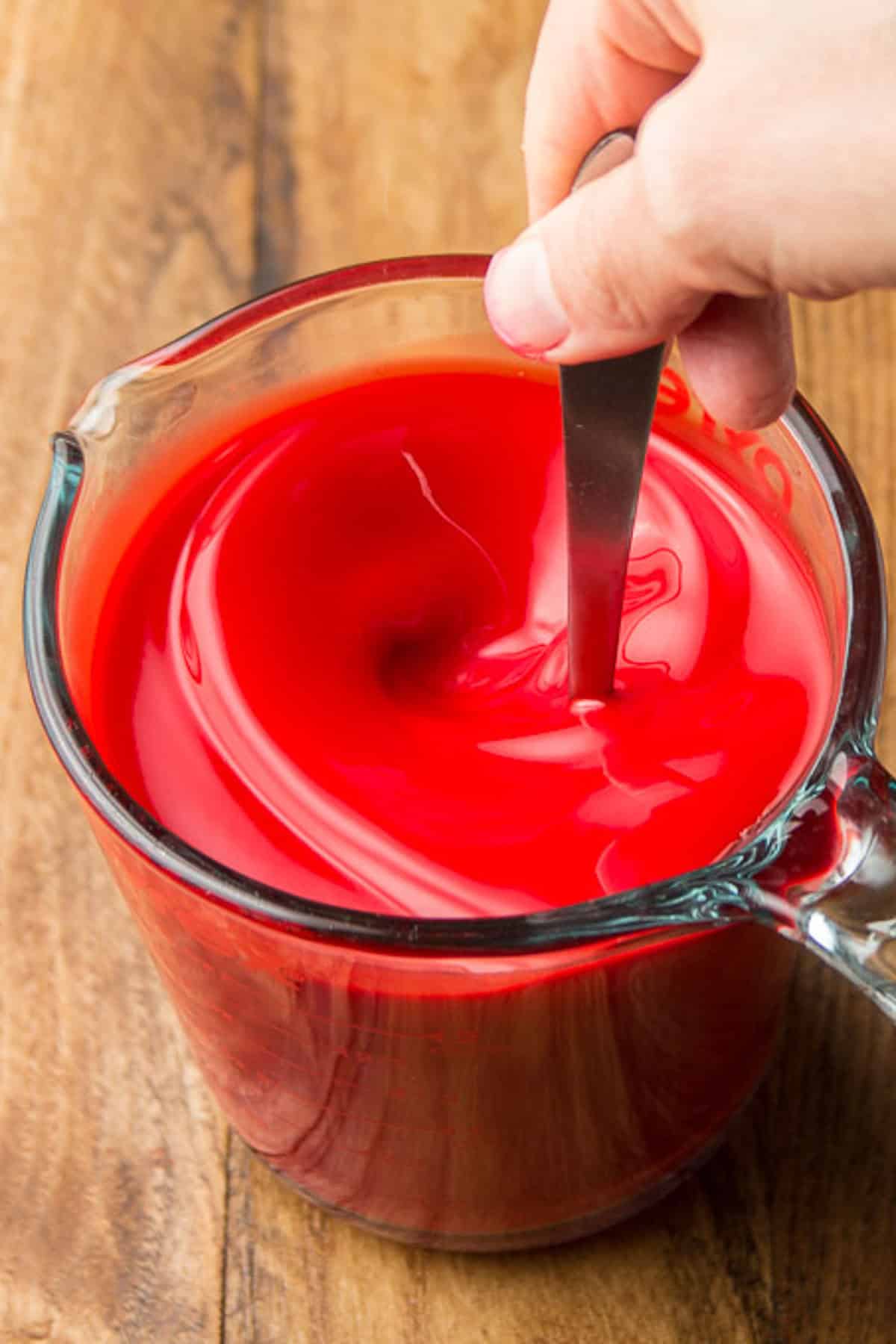
Step 2: Combine wet ingredients. Mix your non-dairy milk, cider vinegar, food coloring, and vanilla together in a small container.
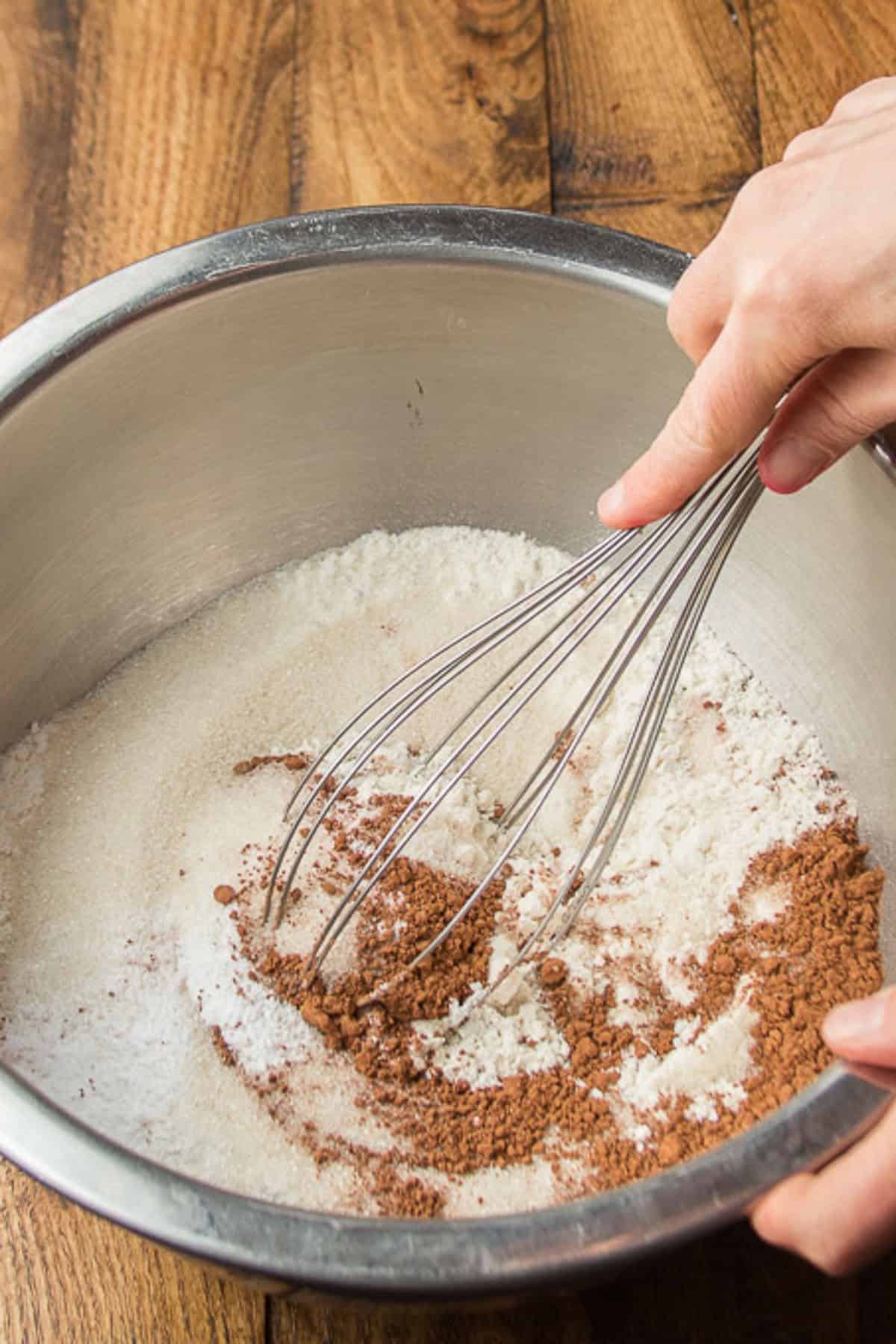
Step 3: Combine dry ingredients. Whisk your flour, sugar, cocoa powder, baking soda, and salt together in a large mixing bowl.
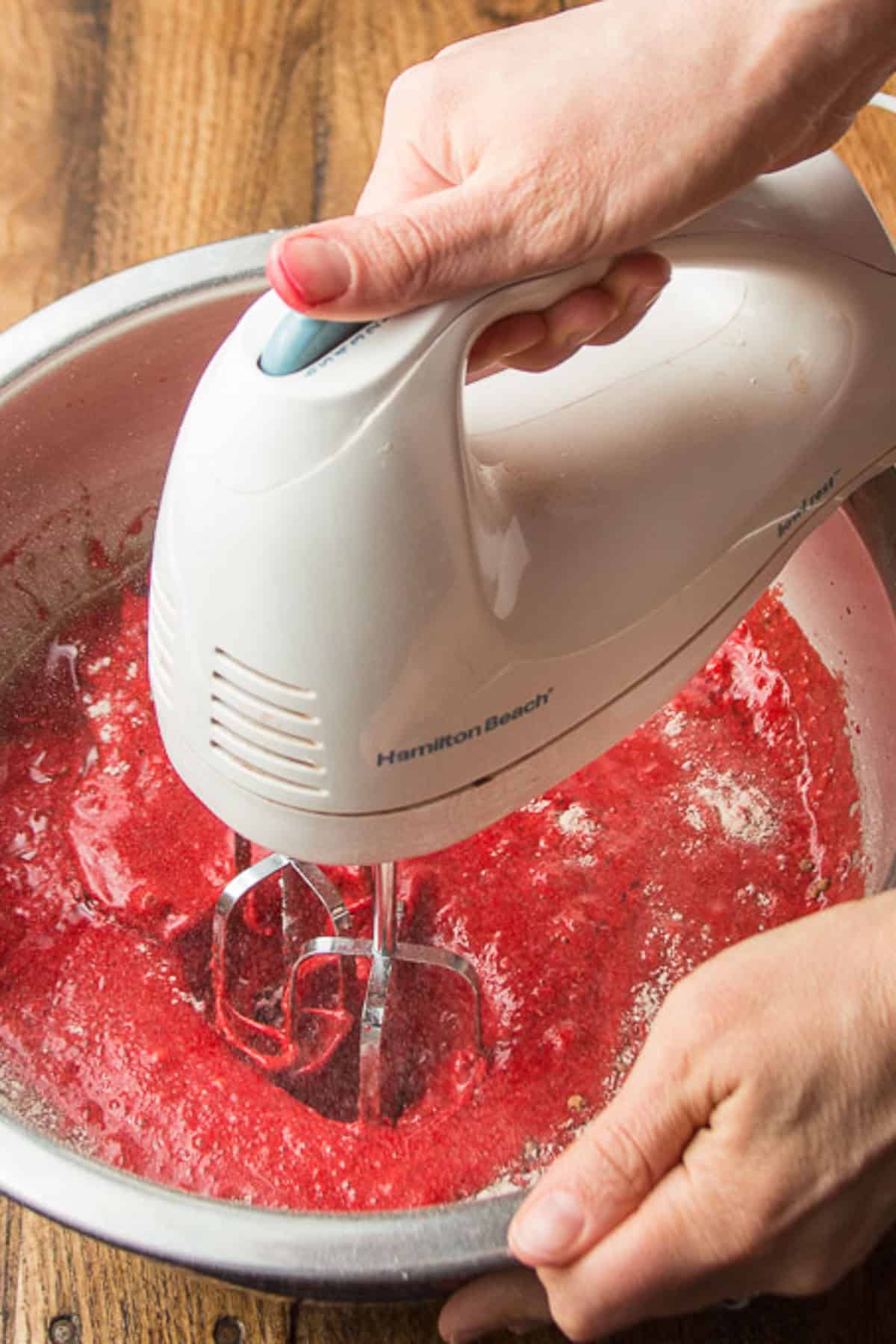
Step 4: Mix the batter. Pour the wet mixture into the dry mixture, then pour in the oil. Beat it all together briefly — stop once the batter is combined.
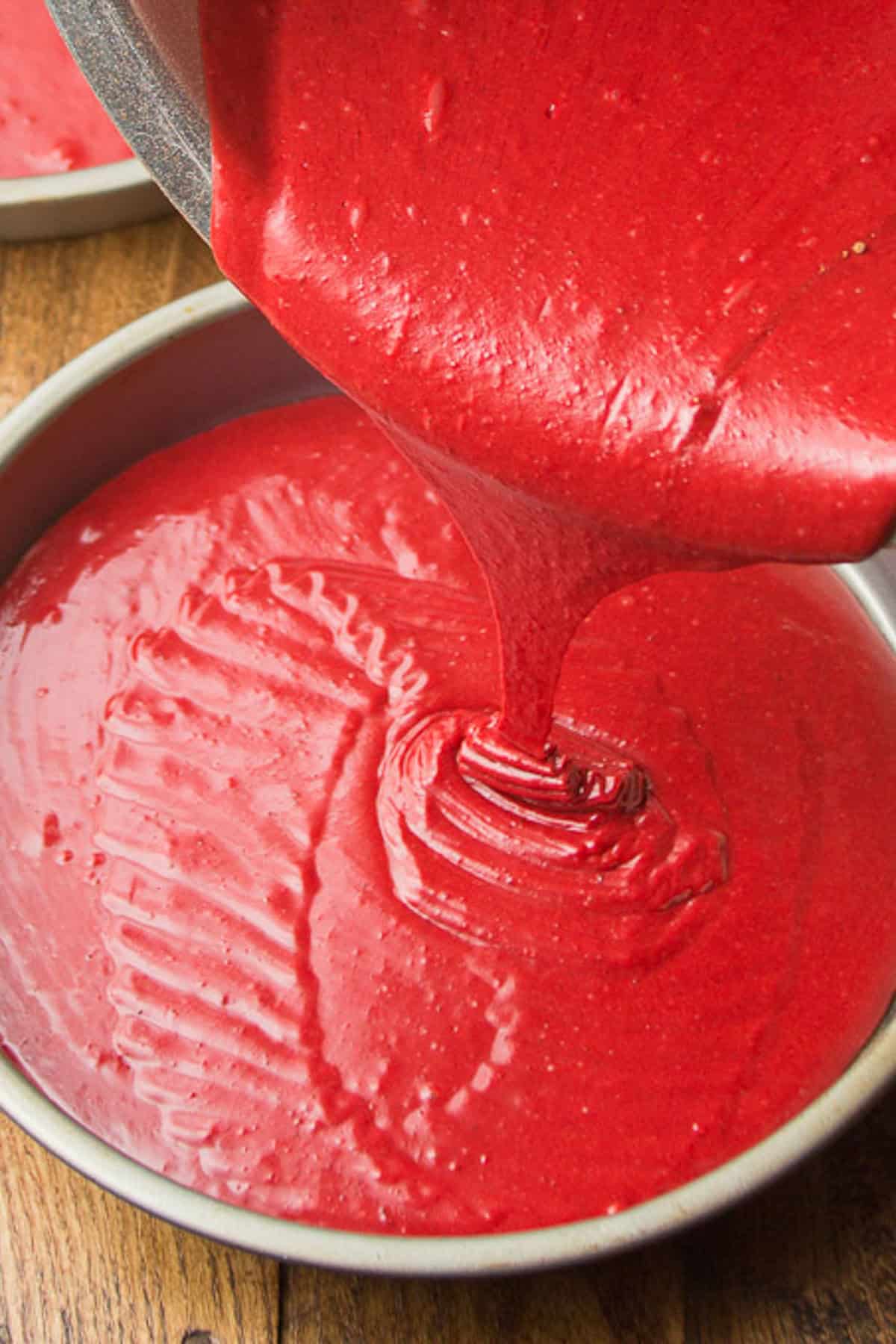
Steps 5 & 6: Pour and bake. Divide the batter among your baking pans, then pop them into the oven for about 30 minutes, or until a toothpick comes out clean.
Tip: To get nice, even layers, use a food scale and weigh your batter as you add it to the pans.
Step 7: Cool. Place the cake pans on a cooling rack when they come out of the oven. Let the cakes cool completely before attempting to remove them from the pan.
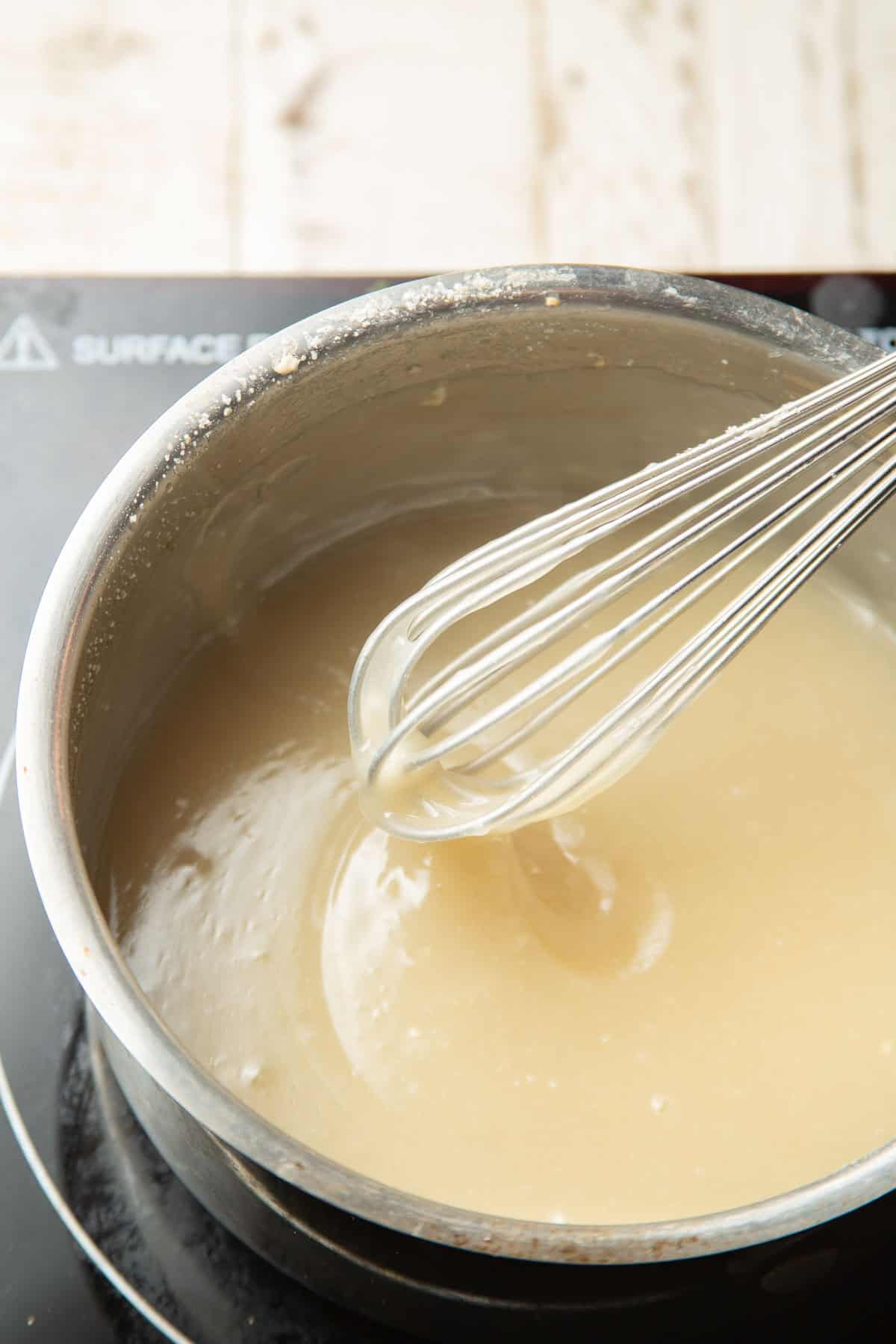
Steps 8 & 9: Make the roux. This is for your frosting. Heat a mixture of sugar, flour, salt, non-dairy milk, and coconut milk in a saucepan, while whisking. Take it off of heat as soon as it thickens, then let it cool.
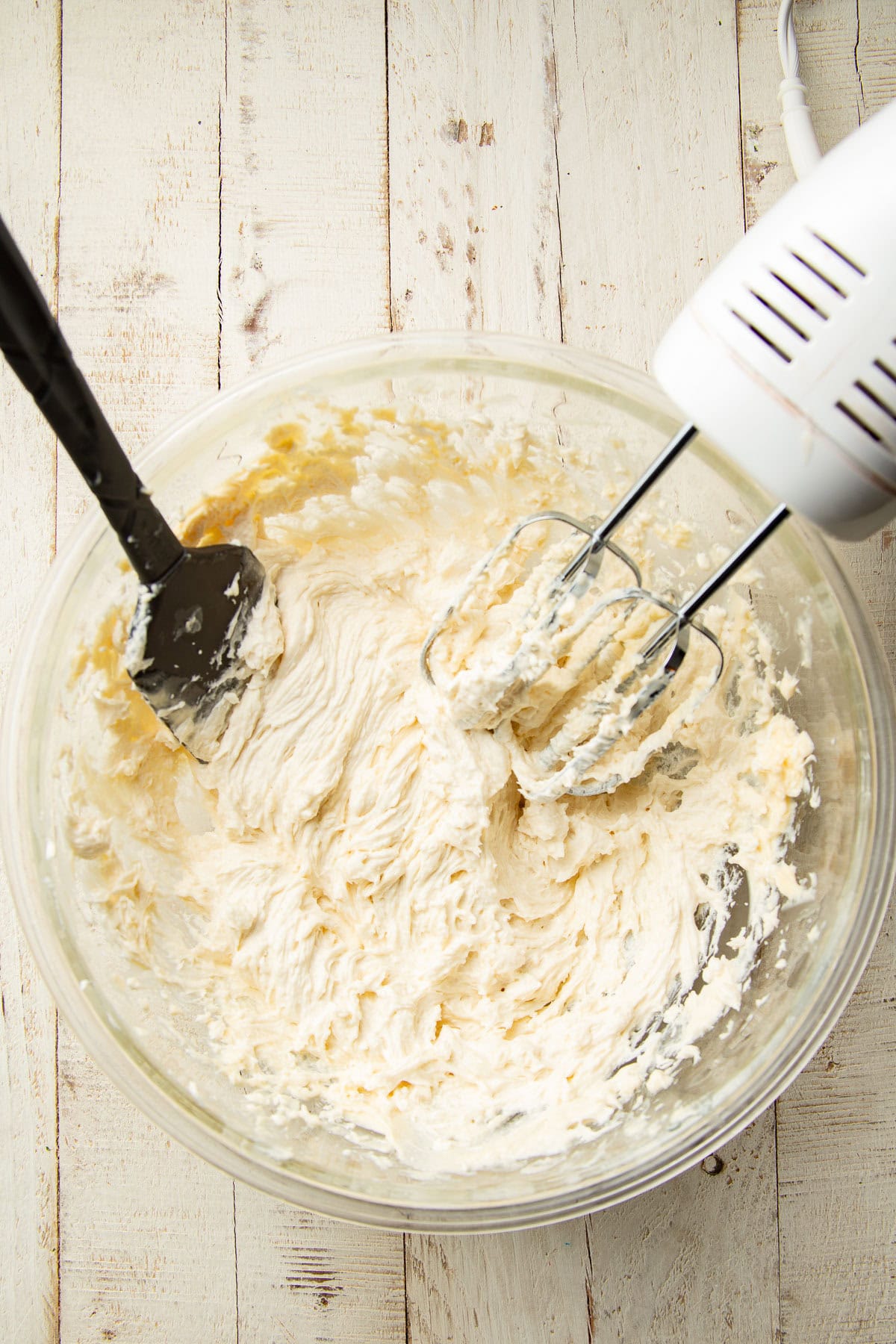
Steps 10 & 11: Whip the frosting. Start by creaming your vegan butter and vanilla, then add the roux, a bit at a time, until it's all been added and you have a fluffy vanilla frosting.
Tip: This cake is also great with my vegan cream cheese frosting and vegan vanilla buttercream frosting.
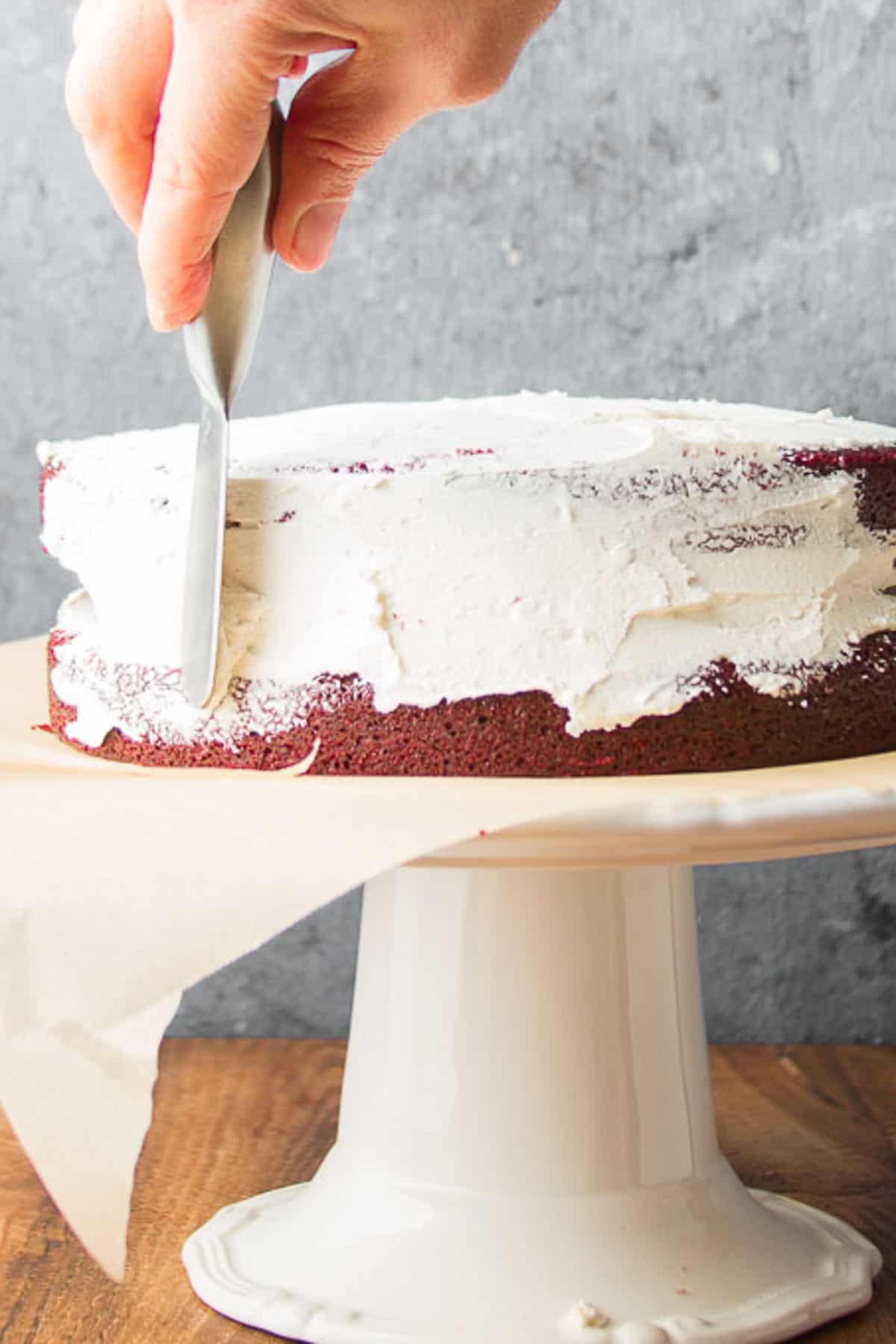
Steps 12 & 13: Frost your cakes. Invert one of the cooled layers on to a cake dish or turntable, then slather it with a layer of frosting. Top it with the second layer, then cover both layers with more frosting.
Tip: Do a crumb coat if you have time. Stack and stuff your layers, then apply a suuuuuper thin coating of frosting. Chill the cake for about an hour to set the coating, then apply a heavier top coat. This helps your frosting to go on evenly and prevents crumbs from getting into your frosting.
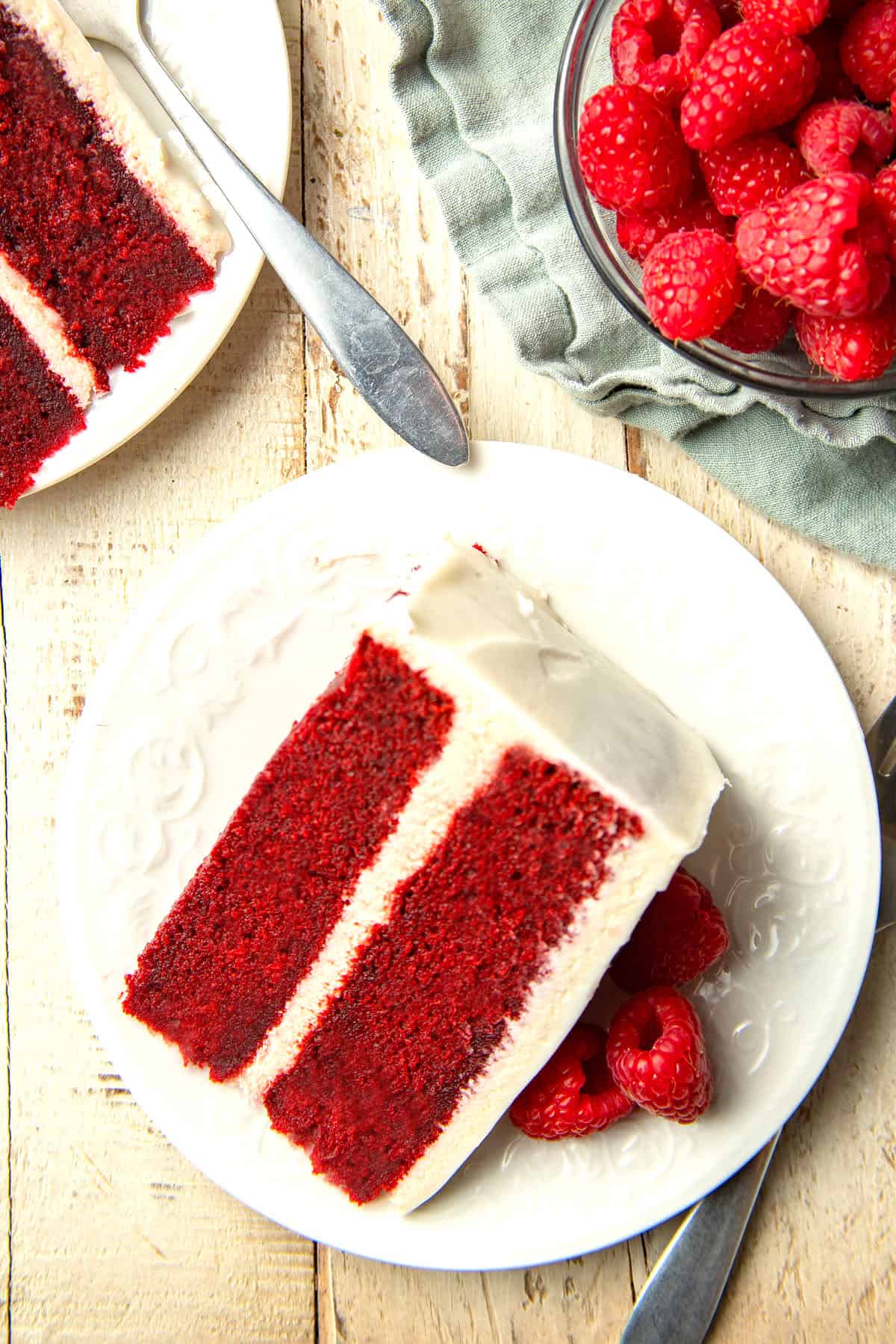
Step 14: Slice and serve. Your vegan red velvet cake is ready to rock! Slice it up and dig in. Personally, I really like this cake chilled, but that's entirely up to you.
Shelf-Life & Storage
Wrap your vegan red velvet cake in plastic or store it in a cake-keeper and it will keep at room temperature for about four days.
This cake is also freezer-friendly! With all the cakes I've made lately, I didn't have much choice but to freeze a few of them. To freeze, make sure the frosting is set and then wrap your cake in a few layers of plastic wrap. Then transfer the cake to a two-gallon freezer bag, seal, and freeze. It should be good for at least three months.
Frequently Asked Questions
I'm not sure, but if you'd like to try it I think an all-purpose gluten-free blend like those made by Bob's Red Mill or King Arthur Flour would be your best bet.
Most sugar in the United States is processed using animal bone char. Organic sugar is processed differently, so it's considered vegan.
Usually, this is due to older baking soda. Test yours by sprinkling it in a glass of vinegar. It should fizz. If it doesn't, it's time for a new box. Another culprit could be overmixing the batter, or letting it sit too long before baking.
More Vegan Cake Recipes
Like this recipe? If so, please stop back and leave me a review and rating below if you try it! Also be sure to follow me on Facebook, Pinterest or Instagram, or subscribe to my newsletter for more recipes like this one!
📖 Recipe
Vegan Red Velvet Cake
Ingredients
- 2 cups unflavored and unsweetened non-dairy milk
- 1 tablespoon apple cider vinegar
- 3 tablespoons vegan red food coloring
- 1 tablespoon vanilla extract
- 3 cups all-purpose flour
- 1 ¾ cups organic granulated sugar
- 3 tablespoons cocoa powder
- 1 ½ teaspoons baking soda
- 1 teaspoon salt
- 1 cup vegetable oil
For the Vegan Ermine Frosting
- 1 ½ cups organic granulated sugar
- ½ cup all-purpose flour
- ¼ teaspoon salt
- 1 cup unflavored and unsweetened non-dairy milk
- ½ cup full-fat coconut milk
- 1 ½ cups vegan butter, room temperature
- 2 teaspoons vanilla extract
Instructions
- Preheat the oven to 350°F. Grease the bottom and sides of two 9-inch cake pans. Line the bottom of the pans with parchment paper, then grease the parchment paper. Flour the insides of the pans, including the parchment paper.
- In a small bowl or measuring cup, stir together the milk, apple cider vinegar, food coloring, and vanilla.
- In a large mixing bowl, whisk together the flour, sugar, cocoa powder, baking soda, and salt.
- Pour the milk mixture into the mixing bowl, followed by the oil. Beat the mixture together with an electric mixer at high-speed, just until fully blended, about 1 minute.
- Divide the batter evenly among the prepared baking pans.
- Bake the cakes for 30 to 35 minutes, until a toothpick inserted into the center of each one comes out clean.
- Transfer both cake layers to a cooling rack. Allow them to cool completely in the pans.
- To make the frosting, first whisk together the sugar, flour, salt, non-dairy milk, and coconut milk in a small saucepan, then place it over medium heat. Heat the mixture while whisking constantly, until it comes to a simmer and thickens. It should take on a thick, pudding-like consistency. Take it off the heat as soon as it gets to this point.
- Let the cooked sugar mixture cool completely in the saucepan, whisking occasionally or covering it with a sheet of plastic wrap directly in contact with the surface to prevent a skin from forming (Note 1).
- Once the sugar mixture has cooled, you can finish making the frosting. Beat the butter and vanilla in a large mixing bowl using an electric mixer at high speed, until creamy, about 2 minutes.
- Begin beating in the cooled sugar mixture, adding it in about five or six increments, beating each one in completely before adding more. Continue until all of the mixture has been added and the frosting is fluffy.
- Invert one of the cake layers on a plate, then remove the pan. Peel off the parchment, then spread an even layer of frosting over the layer.
- Carefully invert the second layer over the first, then remove it from the pan and remove the parchment paper. Distribute the frosting over the top and sides of the cake.
- Allow the cake to sit for at least a few minutes for the frosting to set. Slice and serve.
Notes
- You can speed up cooling by placing the pot in a cool water bath, if desired.
Would you like to save this?
Nutrition
Nutrition information is provided as an estimate only and may vary based on ingredients, brands, portion sizes, and preparation methods.

I can't have coconut. Is there anything else I can use?
You could use a vegan heavy cream alternative, but be sure to check the ingredients, since some are coconut-oil based. Another option is to simply use more of the other non-dairy milk you’re already using in the frosting — just choose the thickest, richest one you can find. A heavy cashew or soy milk should work well.
The cake is great. We really enjoyed it. I already had an frosting recipe so I did not try it.
Glad you enjoyed it!
I've made the frosting with regular Earth Balance and it worked out just fine, but never tried the olive oil variety. What went wrong? Let me know and I'll try and help you pin down the problem!
The ingredients kept getting more and more clumpy but seemed to be separating from the oil.
My best guess is that it is the vegan butter you used. I usually have the best luck with Miyokos, so maybe give it a try if you can get your hands on it!
I want to try this for Christmas. I'm thinking of doing a Chocolate ganache with dark cherry layer between cakes. Any hints/tips?
That sounds delicious! I make a vegan ganache with coconut milk and chocolate chips - I included it in this recipe that I just posted today! https://www.connoisseurusveg.com/vegan-chocolate-cheesecake/ If you do something like this, try chilling it for a bit before spreading it on the cake. This will thicken it up so it doesn't all run out the sides. Enjoy!
I thought that dyes were tested on animals and that the red comes from the semen of bulls and/or other animals? If so that doesn't make them vegan so hopefully there's another alternative or just don't use red coloring.
Hi Lauren! There's actually a discussion within the post on different coloring options. I did confirm that the McCormick red dye is not animal derived. I can't find any info on whether or not they test on animals (I'm guessing this will vary by brand), but I'll keep looking into it!
I'd love to hear how the frosting turns out! I thought about trying to veganize it, but I got the white chocolate frosting idea in my head and was pretty intent on trying it. I hope you enjoy the cake!
Dear Alissa,
Your recipe looks AMAZING. I try to bake without using sugar. Do you, by chance, have any suggestions for making this recipe using maple syrup or any other sugar substitute?
Thank you very much!
Thanks Janet! I'm not sure about maple syrup, since it's liquid and would throw off the ratio of wet to dry ingredients. Are there any granulated sweeteners that work with your diet? Coconut sugar could be subbed directly for the sugar. You could probably also use something like erythritol and increase the amount by about a third.